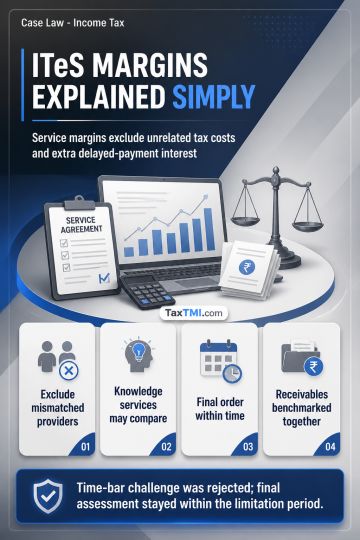
Transfer-pricing treatment of ITeS margins excludes pass-through tax recoveries and separate delayed-receivables interest after working-capital adjust...
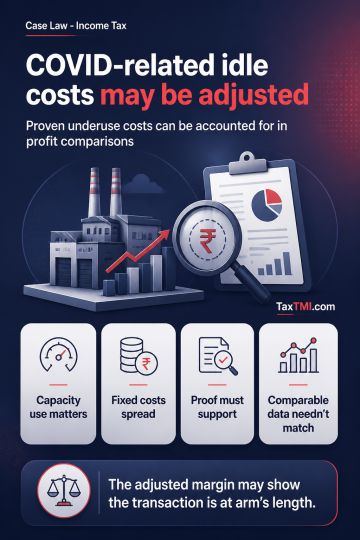
Capacity-utilisation adjustments under TNMM can neutralise substantiated COVID-related idle costs where underutilisation materially affects profitabil...
TNMM functional comparability requires excluding rice manufacturers from a pure Basmati rice trader's benchmark and recognising operating export recei...
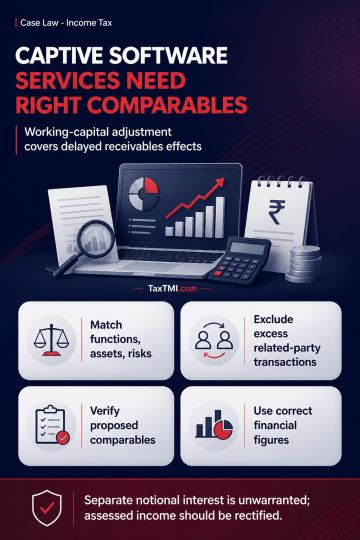
Working-capital adjustment subsumes delayed-receivable effects in TNMM benchmarking of captive software-development services, avoiding separate notion...
Transfer-pricing comparability requires exclusion of financially illogical super-profit comparables and correction of unsupported annual-report and ma...
Charitable character assessment preserves Section 80G approval despite inclusive spiritual teachings and incidental religious expenditure within the s...
Penalty proceedings for cash-loan acceptance require assessment proceedings and recorded Assessing Officer satisfaction; absent these, the proceedings...
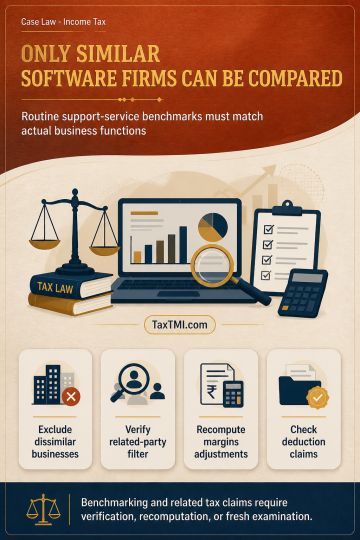
Functional comparability governs software-service benchmarking: dissimilar companies are excluded, while related-party filters, margins and working-ca...
Penalty under section 271C was held unsustainable where the order was passed beyond the six-month limit prescribed by section 275(1)(c), as fiscal limitation provisions must be strictly applied and penalty cannot be imposed after expiry of that period. The tribunal also noted that the alleged default arose from a disallowance treated as interest-related expenditure, yet the reference for penalty was made after an inordinate 18-month delay. That delay was found to defeat the object of section 275(1)(c), and the penalty order, as well as the appellate affirmation, was set aside and the penalty deleted.
Penalty under section 271C was held unsustainable where the order was passed beyond the six-month limit prescribed by section 275(1)(c), as fiscal limitation provisions must be strictly applied and penalty cannot be imposed after expiry of that period. The tribunal also noted that the alleged default arose from a disallowance treated as interest-related expenditure, yet the reference for penalty was made after an inordinate 18-month delay. That delay was found to defeat the object of section 275(1)(c), and the penalty order, as well as the appellate affirmation, was set aside and the penalty deleted.
Note: It is a system-generated summary and is for quick reference only.
 TaxTMI
  TaxTMI
 of 4826













 Join Channel


