Export valuation requires contemporaneous evidence; unrelated invoices cannot prove overvaluation, and dual penalties on firm and partner are impermis...
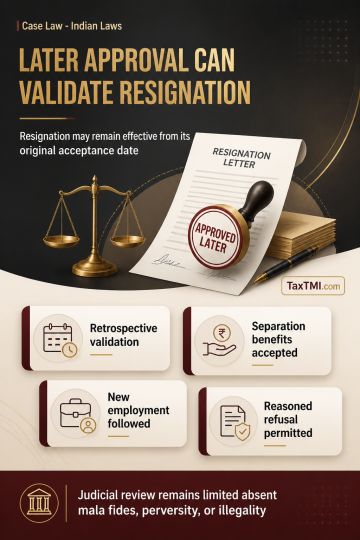
Ratification of resignation acceptance validates separation retrospectively, while withdrawal may be refused through reasoned administrative discretio...
Nature-dependent electricity contracts receive new Ind AS accounting, hedge designation, transition and financial-statement disclosure requirements fr...
Alternative GST remedy permitted protective writ intervention for ex parte adjudication, preserving independent appellate review of input tax credit d...
Penalty under section 271C was held unsustainable where the order was passed beyond the six-month limit prescribed by section 275(1)(c), as fiscal limitation provisions must be strictly applied and penalty cannot be imposed after expiry of that period. The tribunal also noted that the alleged default arose from a disallowance treated as interest-related expenditure, yet the reference for penalty was made after an inordinate 18-month delay. That delay was found to defeat the object of section 275(1)(c), and the penalty order, as well as the appellate affirmation, was set aside and the penalty deleted.
Penalty under section 271C was held unsustainable where the order was passed beyond the six-month limit prescribed by section 275(1)(c), as fiscal limitation provisions must be strictly applied and penalty cannot be imposed after expiry of that period. The tribunal also noted that the alleged default arose from a disallowance treated as interest-related expenditure, yet the reference for penalty was made after an inordinate 18-month delay. That delay was found to defeat the object of section 275(1)(c), and the penalty order, as well as the appellate affirmation, was set aside and the penalty deleted.
Note: It is a system-generated summary and is for quick reference only.
 TaxTMI
  TaxTMI
 of 4819


















 Join Channel