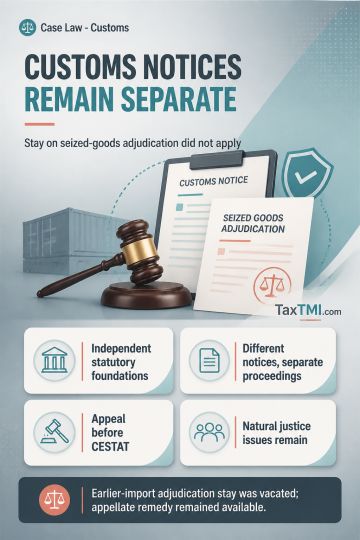
Independent show-cause notices remain separate proceedings, while customs adjudication challenges should ordinarily follow the statutory appellate rem...
Institutional incapacity in customs settlement proceedings excludes non-functional quorum periods from statutory disposal timelines, preventing automa...
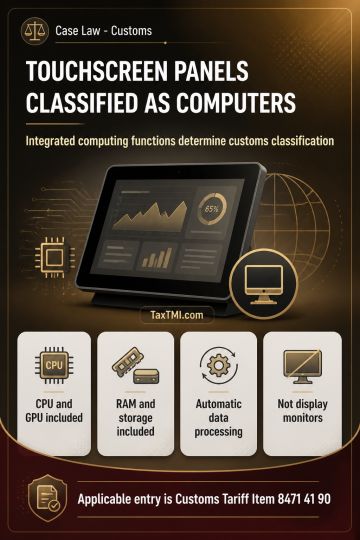
Interactive touchscreen panels with integrated computing functions fall under automatic data-processing machines rather than display monitors for cust...
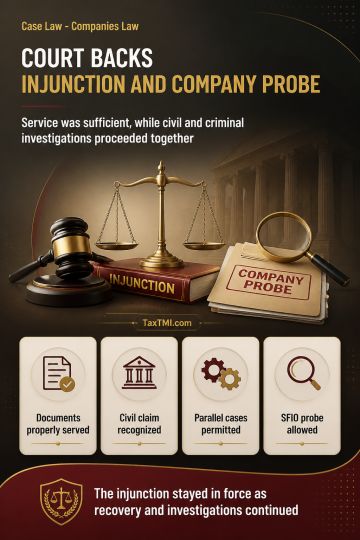
Ex parte injunction service requirements were substantially met, while civil recovery and SFIO investigation into provident fund defalcation continued...
Page of 4813
Press 'Enter' after typing page number.
641 to 660 of 96257 Results
❮
❯
❯❯
0 / 200
Expand Note
Add to Folder
No Folders have been created
+
Are you sure you want to delete "My most important" ?
Physical and mechanical beneficiation that removes foreign matter and concentrates mineral content was treated as manufacture under Chapter Note 4 to Chapter 26, and the goods were classifiable as concentrates. Despite failure to follow CT-3 and related procedure, duty-free clearances to 100% EOUs could not be denied because the lapse arose from a bona fide belief that the goods were not dutiable, and the law did not require an impossible act. The department also failed to prove that the disputed clearances were not as such supplies, so those sales were excluded from turnover. The extended limitation period was rejected because suppression, clandestine removal, and intent to evade duty were not established in an interpretational dispute, and the demand, interest and penalty were set aside.
Physical and mechanical beneficiation that removes foreign matter and concentrates mineral content was treated as manufacture under Chapter Note 4 to Chapter 26, and the goods were classifiable as concentrates. Despite failure to follow CT-3 and related procedure, duty-free clearances to 100% EOUs could not be denied because the lapse arose from a bona fide belief that the goods were not dutiable, and the law did not require an impossible act. The department also failed to prove that the disputed clearances were not as such supplies, so those sales were excluded from turnover. The extended limitation period was rejected because suppression, clandestine removal, and intent to evade duty were not established in an interpretational dispute, and the demand, interest and penalty were set aside.
Note: It is a system-generated summary and is for quick reference only.
 TaxTMI
  TaxTMI
 of 4813









 Join Channel


