Transfer pricing and tax deductions upheld on established principles, while employee contributions and warranty provisions returned for fresh examinat...
Captive transfer pricing relies on industrial consumer tariffs, while genuine quotations can benchmark effluent treatment transfers under the Other Me...
Specific tariff classification for ophthalmic instruments and extended limitation principles determine the treatment of duty demands, confiscation, an...
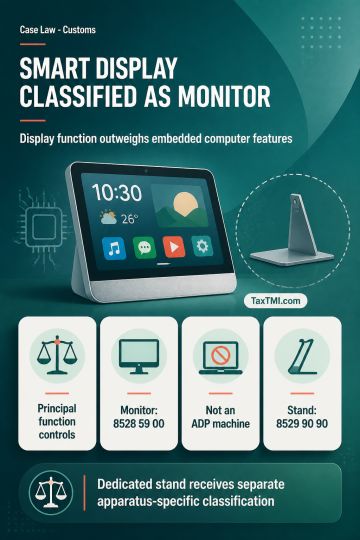
Integrated golf function determines classification, placing launch monitors and simulators under other golf equipment rather than measuring instrument...
Public servant status under anti-corruption law extends to recognised stock exchange leadership; constitutional and sanction challenges do not succeed...
Acquiescence, homebuyer protection and clean-slate resolution principles prevent landowners from disrupting an integrated project through late termina...
Homebuyers voting as a class through their authorised representative bound all class members, so individual dissenters could not unsettle a resolution plan that had already been validly approved and finally rejected in earlier challenge. The Court also held that the corporate veil could be lifted in CIRP where wholly owned or controlled subsidiaries functioned only as fronts for the holding company's integrated project activity; the leased project assets were therefore not outside the insolvency process. GNIDA was held disentitled to recover penal interest, penal charges and time-extension penalties because of its own delay and inaction, but it remained entitled to recalculated principal dues only, payable by the successful resolution applicants without interest during the payment period.
Homebuyers voting as a class through their authorised representative bound all class members, so individual dissenters could not unsettle a resolution plan that had already been validly approved and finally rejected in earlier challenge. The Court also held that the corporate veil could be lifted in CIRP where wholly owned or controlled subsidiaries functioned only as fronts for the holding company's integrated project activity; the leased project assets were therefore not outside the insolvency process. GNIDA was held disentitled to recover penal interest, penal charges and time-extension penalties because of its own delay and inaction, but it remained entitled to recalculated principal dues only, payable by the successful resolution applicants without interest during the payment period.
Note: It is a system-generated summary and is for quick reference only.
 TaxTMI
  TaxTMI
 of 4811


















 Join Channel


