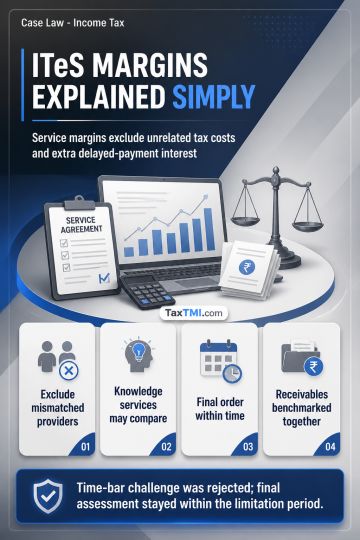
Transfer-pricing treatment of ITeS margins excludes pass-through tax recoveries and separate delayed-receivables interest after working-capital adjust...
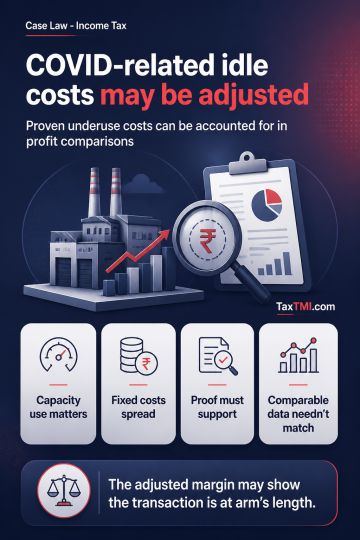
Capacity-utilisation adjustments under TNMM can neutralise substantiated COVID-related idle costs where underutilisation materially affects profitabil...
TNMM functional comparability requires excluding rice manufacturers from a pure Basmati rice trader's benchmark and recognising operating export recei...
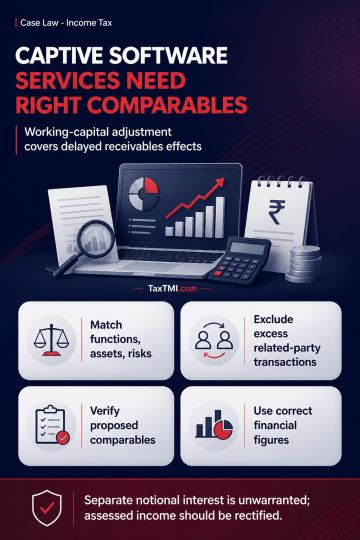
Working-capital adjustment subsumes delayed-receivable effects in TNMM benchmarking of captive software-development services, avoiding separate notion...
Transfer-pricing comparability requires exclusion of financially illogical super-profit comparables and correction of unsupported annual-report and ma...
Charitable character assessment preserves Section 80G approval despite inclusive spiritual teachings and incidental religious expenditure within the s...
Penalty proceedings for cash-loan acceptance require assessment proceedings and recorded Assessing Officer satisfaction; absent these, the proceedings...
Functional comparability governs software-service benchmarking: dissimilar companies are excluded, while related-party filters, margins and working-ca...
Homebuyers voting as a class through their authorised representative bound all class members, so individual dissenters could not unsettle a resolution plan that had already been validly approved and finally rejected in earlier challenge. The Court also held that the corporate veil could be lifted in CIRP where wholly owned or controlled subsidiaries functioned only as fronts for the holding company's integrated project activity; the leased project assets were therefore not outside the insolvency process. GNIDA was held disentitled to recover penal interest, penal charges and time-extension penalties because of its own delay and inaction, but it remained entitled to recalculated principal dues only, payable by the successful resolution applicants without interest during the payment period.
Homebuyers voting as a class through their authorised representative bound all class members, so individual dissenters could not unsettle a resolution plan that had already been validly approved and finally rejected in earlier challenge. The Court also held that the corporate veil could be lifted in CIRP where wholly owned or controlled subsidiaries functioned only as fronts for the holding company's integrated project activity; the leased project assets were therefore not outside the insolvency process. GNIDA was held disentitled to recover penal interest, penal charges and time-extension penalties because of its own delay and inaction, but it remained entitled to recalculated principal dues only, payable by the successful resolution applicants without interest during the payment period.
Note: It is a system-generated summary and is for quick reference only.
 TaxTMI
  TaxTMI
 of 4826















 Join Channel


