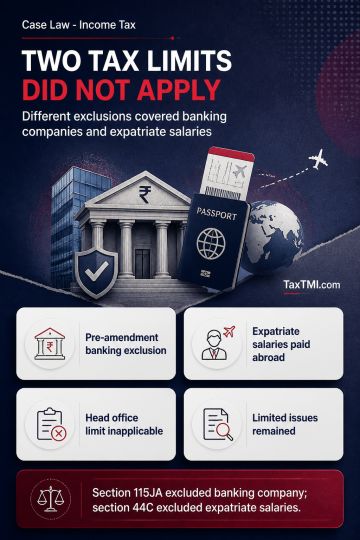
Minimum alternate tax exclusions for pre-amendment banking companies and expatriate Indian branch salaries remain outside head office expenditure limi...
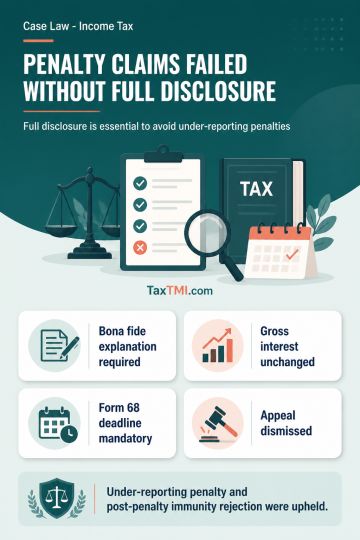
Bona fide disclosure requirements govern under-reporting penalties, and post-penalty immunity applications cannot secure available statutory protectio...
Certificate-of-origin verification procedure governs preferential customs benefits; denial without retroactive verification was set aside with consequ...
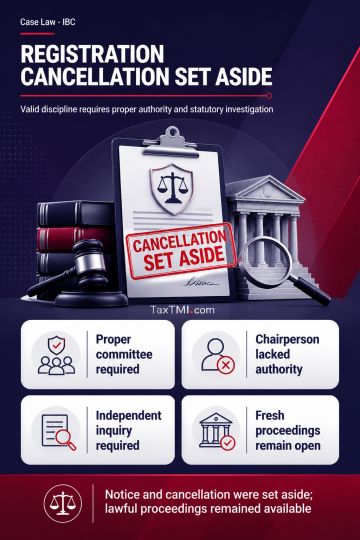
Disciplinary Committee jurisdiction and mandatory investigation requirements invalidated cancellation of an insolvency professional's registration and...
GST proceedings initiated against an amalgamating company after the scheme of merger took effect were void ab initio because the entity had ceased to exist in law. The Court held that once the merger was intimated to the GST authorities, a show-cause notice and any consequential order could not validly be issued against the non-existent company, as this was a jurisdictional defect. Section 87 of the CGST Act was confined to the interregnum between the effective date of amalgamation and the date of the order, and did not authorise proceedings against a dissolved entity after merger. The impugned order was therefore unsustainable and the petition was allowed.
GST proceedings initiated against an amalgamating company after the scheme of merger took effect were void ab initio because the entity had ceased to exist in law. The Court held that once the merger was intimated to the GST authorities, a show-cause notice and any consequential order could not validly be issued against the non-existent company, as this was a jurisdictional defect. Section 87 of the CGST Act was confined to the interregnum between the effective date of amalgamation and the date of the order, and did not authorise proceedings against a dissolved entity after merger. The impugned order was therefore unsustainable and the petition was allowed.
Note: It is a system-generated summary and is for quick reference only.
 TaxTMI
 of 4801







 Join Channel


 TaxTMI