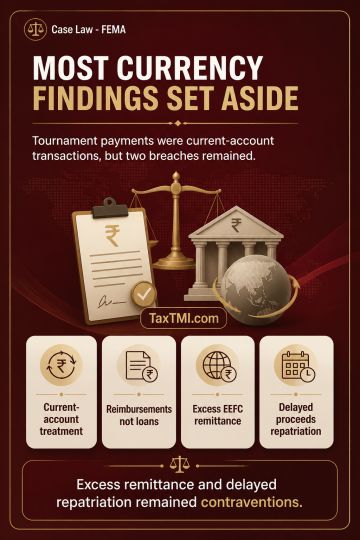
Current account treatment of overseas tournament services removed most FEMA findings, but excess EEFC remittance and delayed repatriation remained bre...
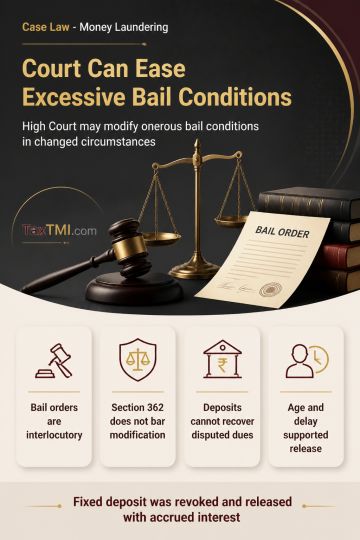
Modification of bail conditions remains available through inherent jurisdiction where onerous deposits undermine justice and cannot recover disputed d...
Merchant banker regulation consolidates registration, governance, capital, reporting, outsourcing and investor-protection requirements under an update...
GST proceedings initiated against an amalgamating company after the scheme of merger took effect were void ab initio because the entity had ceased to exist in law. The Court held that once the merger was intimated to the GST authorities, a show-cause notice and any consequential order could not validly be issued against the non-existent company, as this was a jurisdictional defect. Section 87 of the CGST Act was confined to the interregnum between the effective date of amalgamation and the date of the order, and did not authorise proceedings against a dissolved entity after merger. The impugned order was therefore unsustainable and the petition was allowed.
GST proceedings initiated against an amalgamating company after the scheme of merger took effect were void ab initio because the entity had ceased to exist in law. The Court held that once the merger was intimated to the GST authorities, a show-cause notice and any consequential order could not validly be issued against the non-existent company, as this was a jurisdictional defect. Section 87 of the CGST Act was confined to the interregnum between the effective date of amalgamation and the date of the order, and did not authorise proceedings against a dissolved entity after merger. The impugned order was therefore unsustainable and the petition was allowed.
Note: It is a system-generated summary and is for quick reference only.
 TaxTMI
 of 4792















 Join Channel


 TaxTMI