Tax exemption for regulatory authority income applies retrospectively, subject to non-commercial activity, unchanged income sources, and return filing...
Dispute Resolution Panel objections must reach both prescribed forums; otherwise assessment may proceed and statutory appeal remains the proper remedy...
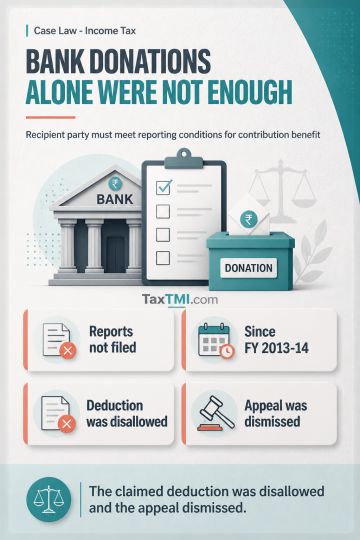
Political contribution deductions require recipient party compliance with contribution-reporting conditions; banking-channel donations alone do not qu...
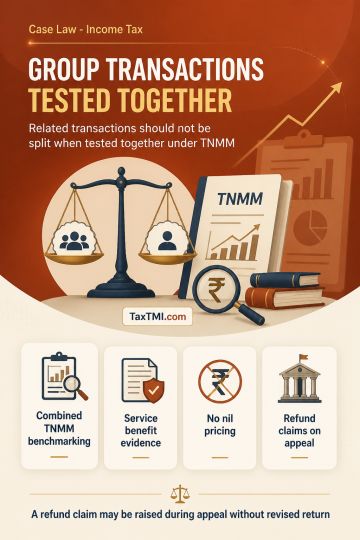
Aggregation under TNMM prevents selective testing of intra-group services without comparable uncontrolled transactions, while appellate additional cla...
Protective assessment cannot duplicate identical receipts under competing characterisations; remote services did not establish a taxable permanent est...
Page of 4817
Press 'Enter' after typing page number.
961 to 980 of 96333 Results
❮
❯
❯❯
0 / 200
Expand Note
Add to Folder
No Folders have been created
+
Are you sure you want to delete "My most important" ?
GST was held not to apply to affiliation fees collected by a statutory university because granting affiliation under the State university law was part of its regulatory and educational mandate, not a commercial supply in the course or furtherance of business. The Court held that Sections 7 and 9 of the CGST Act could not be used to characterise such statutory functions as taxable services, and therefore the demand under Section 74 lacked jurisdiction. In the alternative, the Court held that affiliation-related activity would also fall within the exemption for educational services, since affiliation forms part of the educational framework for admissions, courses and degree conferment.
GST was held not to apply to affiliation fees collected by a statutory university because granting affiliation under the State university law was part of its regulatory and educational mandate, not a commercial supply in the course or furtherance of business. The Court held that Sections 7 and 9 of the CGST Act could not be used to characterise such statutory functions as taxable services, and therefore the demand under Section 74 lacked jurisdiction. In the alternative, the Court held that affiliation-related activity would also fall within the exemption for educational services, since affiliation forms part of the educational framework for admissions, courses and degree conferment.
Note: It is a system-generated summary and is for quick reference only.
 TaxTMI
  TaxTMI
 of 4817






 Join Channel