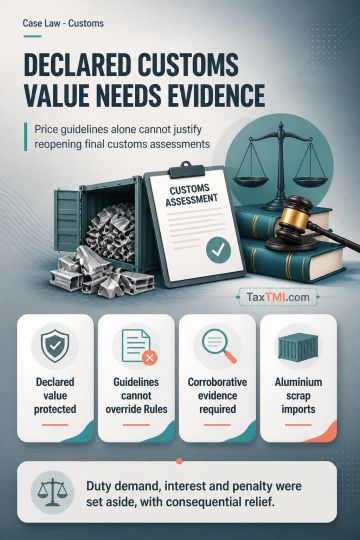
Transaction value cannot be rejected solely on non-statutory valuation guidelines without corroborative evidence supporting reassessment of final cust...
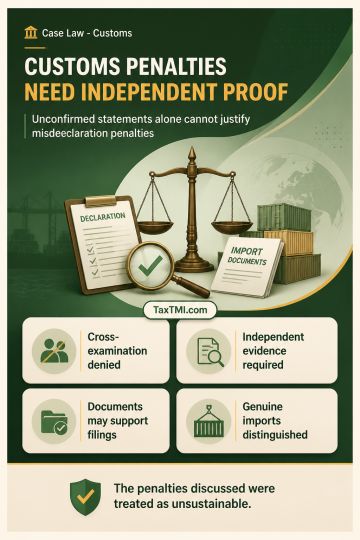
Cross-examination rights and corroborated evidence limit customs penalties for misdeclaration in genuine import transactions involving documented clea...
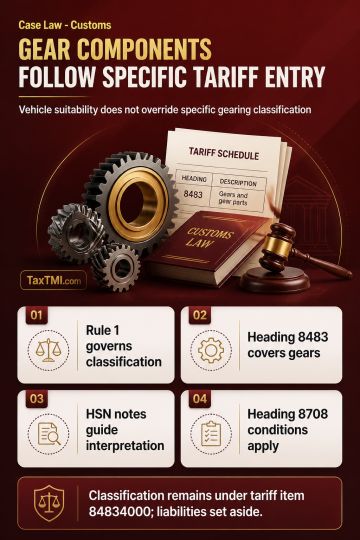
Tariff classification of vehicle gear components follows the specific gearing entry, displacing motor-vehicle parts classification and related liabili...
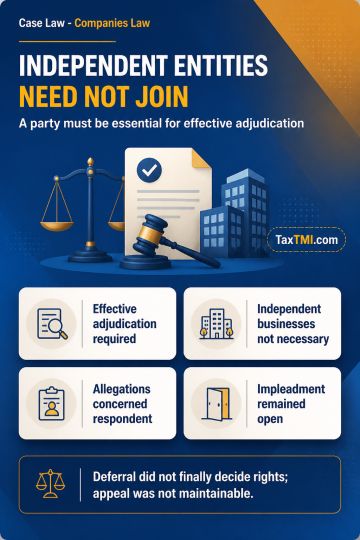
Necessary-party requirements limit impleadment of independent entities, while deferred consideration does not create an appealable adverse determinati...
Under the GST regime, intelligence-based enforcement may be initiated by either Central or State tax authorities even where the taxpayer is registered with the other administration, so the State authority's jurisdiction to begin proceedings and issue orders was upheld. Classification disputes and objections to invocation of Section 74 involved disputed factual questions and were not entertained in writ jurisdiction under Article 226. Those grounds, including the plea that the reply was not properly considered, were held to be matters for statutory appeal, and the writ petitions were dismissed with liberty to appeal.
Under the GST regime, intelligence-based enforcement may be initiated by either Central or State tax authorities even where the taxpayer is registered with the other administration, so the State authority's jurisdiction to begin proceedings and issue orders was upheld. Classification disputes and objections to invocation of Section 74 involved disputed factual questions and were not entertained in writ jurisdiction under Article 226. Those grounds, including the plea that the reply was not properly considered, were held to be matters for statutory appeal, and the writ petitions were dismissed with liberty to appeal.
Note: It is a system-generated summary and is for quick reference only.
 TaxTMI
  TaxTMI
 of 4819











 Join Channel


