Commercial vehicle depreciation, scientifically determined warranty provisions and exempt-income disallowances were resolved in favour of the taxpayer...
Inherited property sale proceeds require capital-gains treatment where ownership is supported by evidence, not suspicion or unverified signature doubt...
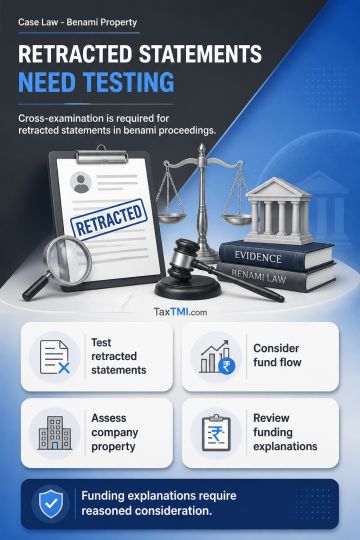
Cross-examination of retracted statements is essential where foundational evidence supports a benami allegation and documented funding explanations re...
Capital-goods exemption covers plant-modernisation accessories, while the import restriction applies only to earlier capital-goods components and spar...
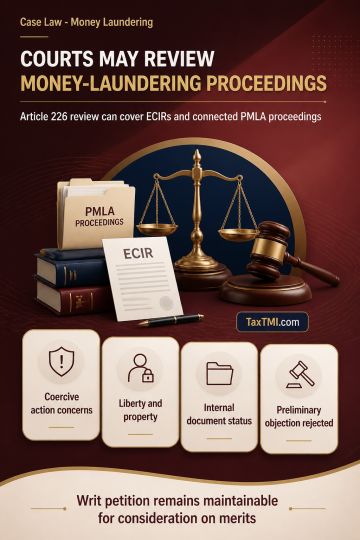
Constitutional judicial review permits challenges to ECIRs and connected money-laundering proceedings where coercive action affects fundamental intere...
A bill of lading clause stating that disputes can be settled by arbitration was held not to create a binding arbitration agreement. At the stage of appointing an arbitrator, the Court confined itself to the prima facie existence of an arbitration agreement and read the clause in its contractual context. The word "can" was treated as permissive, indicating only a possible mode of settlement rather than a mandatory obligation to arbitrate. Applying the principles in K.K. Modi and Jagdish Chander, the Court found that the clause required further consent when a dispute arose and therefore lacked the definitiveness needed to compel arbitration. The refusal to appoint an arbitrator was upheld.
A bill of lading clause stating that disputes can be settled by arbitration was held not to create a binding arbitration agreement. At the stage of appointing an arbitrator, the Court confined itself to the prima facie existence of an arbitration agreement and read the clause in its contractual context. The word "can" was treated as permissive, indicating only a possible mode of settlement rather than a mandatory obligation to arbitrate. Applying the principles in K.K. Modi and Jagdish Chander, the Court found that the clause required further consent when a dispute arose and therefore lacked the definitiveness needed to compel arbitration. The refusal to appoint an arbitrator was upheld.
Note: It is a system-generated summary and is for quick reference only.
 TaxTMI
  TaxTMI
 of 4827

















 Join Channel


