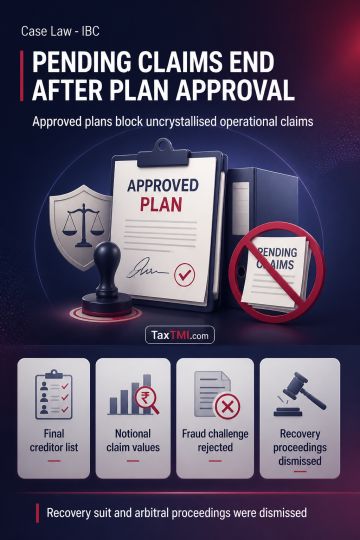
Clean slate principle extinguishes uncrystallised operational claims and bars continuation of pending recovery and arbitral proceedings after plan app...
Works contract classification governs composite layout-development contracts where VAT-paid goods are transferred alongside construction and infrastru...
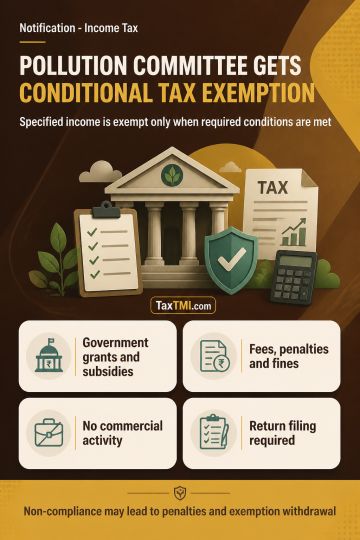
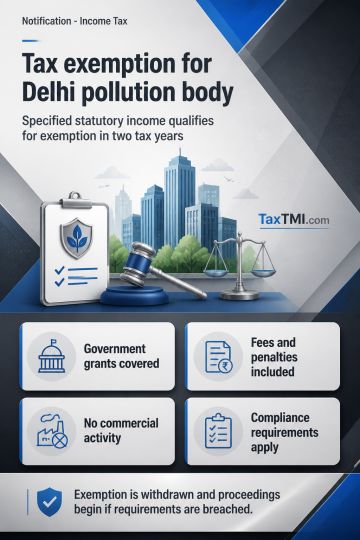
Specified income tax exemption for pollution control body remains conditional on non-commercial activity, unchanged income character, and return filin...
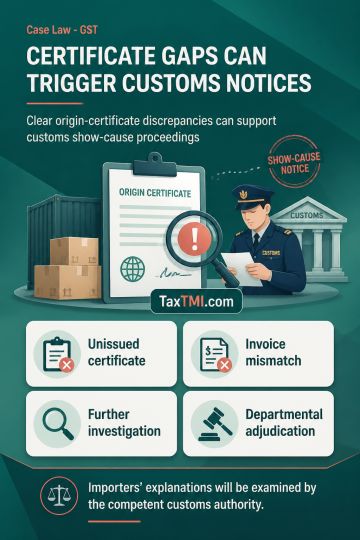
Jurisdictional facts in certificate-of-origin discrepancies can support customs show-cause proceedings, leaving factual explanations for departmental ...
Once a Section 9 application was admitted and an interim resolution professional appointed, control of the corporate debtor's affairs vested in the IRP, so a suspended director could not file an appeal in the corporate debtor's name as its authorised representative. The appeal was inherently non-maintainable at inception, not a curable procedural defect, and the NCLAT erred in allowing later amendment of the cause title and memo of appeal. Given the strict limitation regime under the Code, with only a limited condonable period, the belated attempt to convert the incompetent appeal into a valid one was rejected. The appeal was dismissed on this ground alone.
Once a Section 9 application was admitted and an interim resolution professional appointed, control of the corporate debtor's affairs vested in the IRP, so a suspended director could not file an appeal in the corporate debtor's name as its authorised representative. The appeal was inherently non-maintainable at inception, not a curable procedural defect, and the NCLAT erred in allowing later amendment of the cause title and memo of appeal. Given the strict limitation regime under the Code, with only a limited condonable period, the belated attempt to convert the incompetent appeal into a valid one was rejected. The appeal was dismissed on this ground alone.
Note: It is a system-generated summary and is for quick reference only.
 TaxTMI
  TaxTMI
 of 4823









 Join Channel