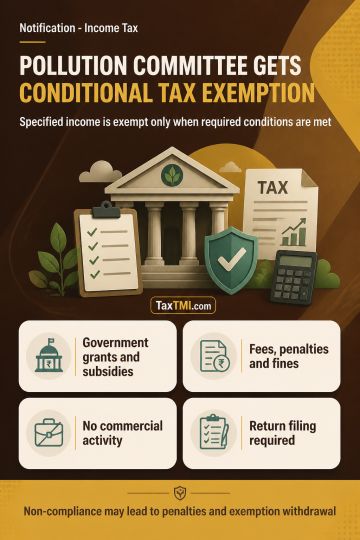
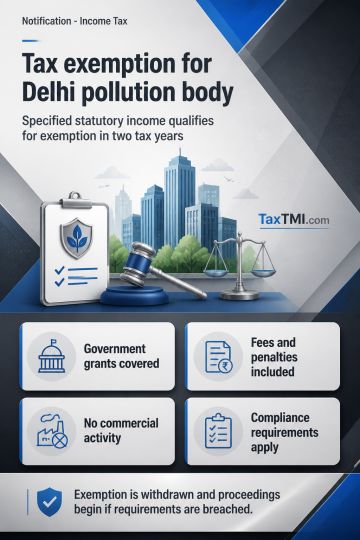
Specified income tax exemption for pollution control body remains conditional on non-commercial activity, unchanged income character, and return filin...
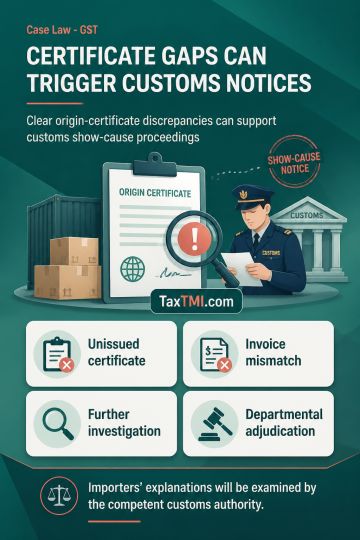
Jurisdictional facts in certificate-of-origin discrepancies can support customs show-cause proceedings, leaving factual explanations for departmental ...
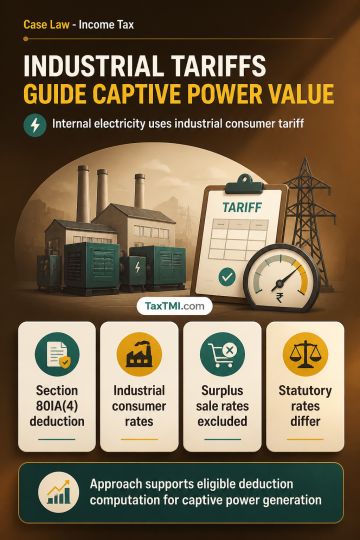
Market value for captive electricity consumption follows industrial consumer tariffs, supporting profit computation for the power generation deduction...
Cargo originating from SEZ and lying at gateway ports because of disruption in maritime routes may be handled through a simplified procedure under Section 143AA of the Customs Act, 1962. On the exporter's request, the originating SEZ may cancel the LEO or shipping bill, after which Customs at the gateway port may permit movement of the cargo out of the port for return to the exporter or for re-routing, without requiring the containers to be brought back to the SEZ. The cargo may also be de-stuffed and stored in a Customs bonded warehouse, and any re-routing must comply with filing requirements and other applicable legal procedures. Electronic communication is permitted and the facility remains in force until 30.04.2026.
Cargo originating from SEZ and lying at gateway ports because of disruption in maritime routes may be handled through a simplified procedure under Section 143AA of the Customs Act, 1962. On the exporter's request, the originating SEZ may cancel the LEO or shipping bill, after which Customs at the gateway port may permit movement of the cargo out of the port for return to the exporter or for re-routing, without requiring the containers to be brought back to the SEZ. The cargo may also be de-stuffed and stored in a Customs bonded warehouse, and any re-routing must comply with filing requirements and other applicable legal procedures. Electronic communication is permitted and the facility remains in force until 30.04.2026.
Note: It is a system-generated summary and is for quick reference only.
 TaxTMI
 of 4803



 Join Channel


 TaxTMI
