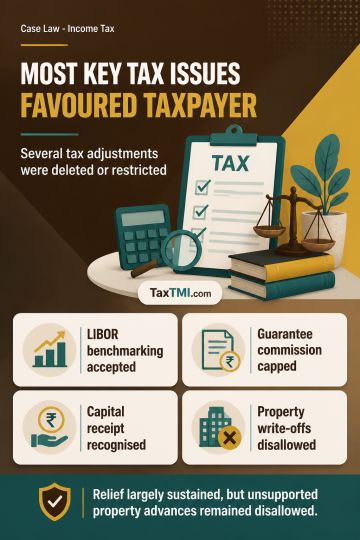
Transfer-pricing benchmarking and capital-receipt principles sustained taxpayer relief, while unsupported property-advance write-offs remained disallo...
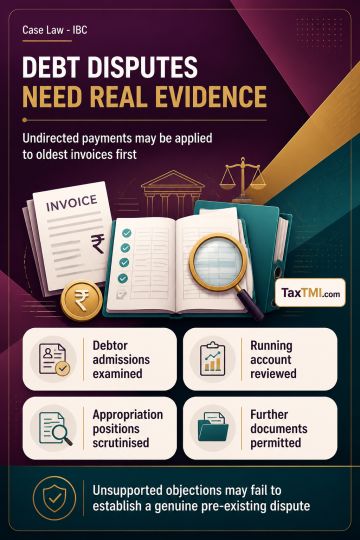
Pre-existing operational debt disputes require genuine evidence, while undirected running-account payments may be appropriated on a first-in-first-out...
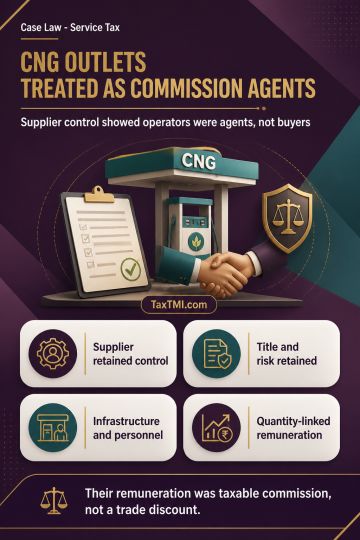
Agency in CNG distribution makes outlet operators commission agents, rendering taxable Business Auxiliary Service rather than purchasing goods for res...
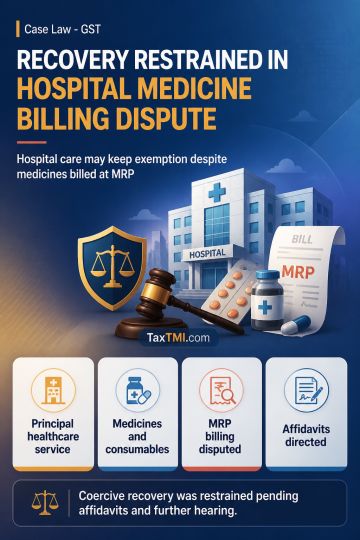
Composite inpatient healthcare supply may retain exemption despite MRP medicine billing, while separate taxable sale characterisation remains disputed...
Limitation under the I&B Code is a strict statutory regime, and a party cannot extend the appellate period by first pursuing writ proceedings instead of the prescribed appeal. The Tribunal held that where the writ petitions were filed after expiry of the original limitation period and were later not entertained due to availability of an effective alternative remedy, the time spent there could not be excluded to revive an otherwise time-barred appeal. Applying the principle that a special statute prevails over the general law, it treated the request to condone delay as beyond jurisdiction and dismissed the appeals as barred by limitation.
Limitation under the I&B Code is a strict statutory regime, and a party cannot extend the appellate period by first pursuing writ proceedings instead of the prescribed appeal. The Tribunal held that where the writ petitions were filed after expiry of the original limitation period and were later not entertained due to availability of an effective alternative remedy, the time spent there could not be excluded to revive an otherwise time-barred appeal. Applying the principle that a special statute prevails over the general law, it treated the request to condone delay as beyond jurisdiction and dismissed the appeals as barred by limitation.
Note: It is a system-generated summary and is for quick reference only.
 TaxTMI
  TaxTMI
 of 4819






 Join Channel