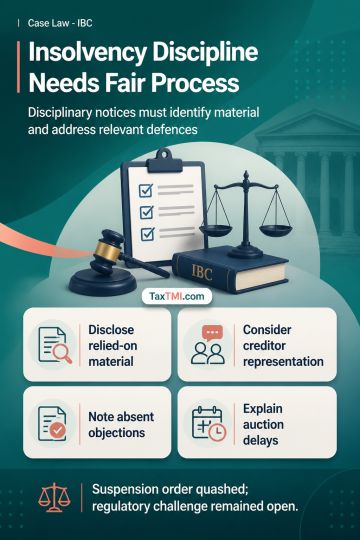
Natural justice in insolvency-professional discipline requires disclosed material; notices based on extraneous material and ignored defences are vitia...
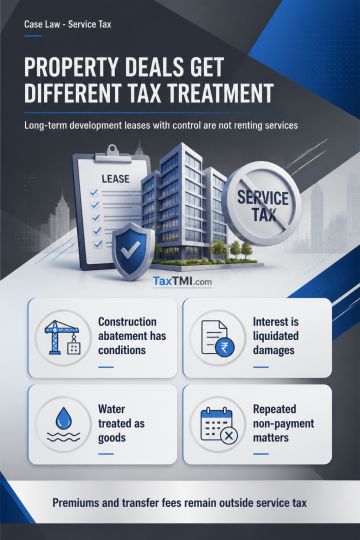
Development rights transfers treated as immovable property, while construction abatement applies and repeated non-payment permits extended service-tax...
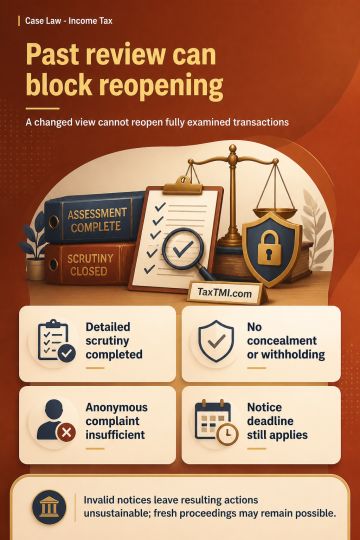
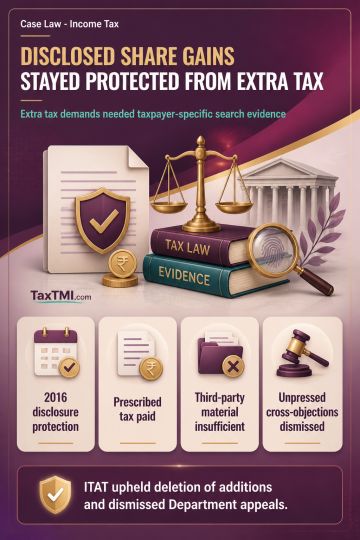
Income Disclosure Scheme immunity and search-material requirements barred further share-transaction additions in unabated assessments under section 15...
Limitation under the I&B Code is a strict statutory regime, and a party cannot extend the appellate period by first pursuing writ proceedings instead of the prescribed appeal. The Tribunal held that where the writ petitions were filed after expiry of the original limitation period and were later not entertained due to availability of an effective alternative remedy, the time spent there could not be excluded to revive an otherwise time-barred appeal. Applying the principle that a special statute prevails over the general law, it treated the request to condone delay as beyond jurisdiction and dismissed the appeals as barred by limitation.
Limitation under the I&B Code is a strict statutory regime, and a party cannot extend the appellate period by first pursuing writ proceedings instead of the prescribed appeal. The Tribunal held that where the writ petitions were filed after expiry of the original limitation period and were later not entertained due to availability of an effective alternative remedy, the time spent there could not be excluded to revive an otherwise time-barred appeal. Applying the principle that a special statute prevails over the general law, it treated the request to condone delay as beyond jurisdiction and dismissed the appeals as barred by limitation.
Note: It is a system-generated summary and is for quick reference only.
 TaxTMI
  TaxTMI
 of 4828







 Join Channel