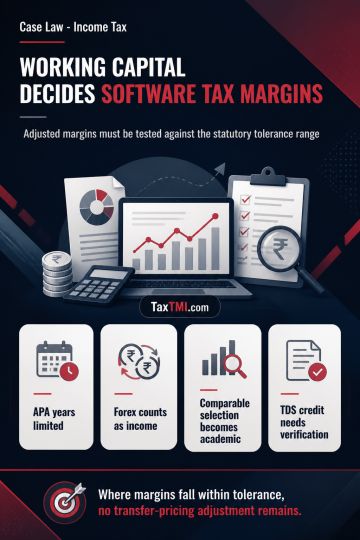
Working-capital adjustment determines whether software-services transfer-pricing margins fall within the statutory tolerance range, eliminating any ad...
Permanent establishment deductions upheld for expatriate salaries, direct costs and trading losses, while head-office costs require fresh classificati...
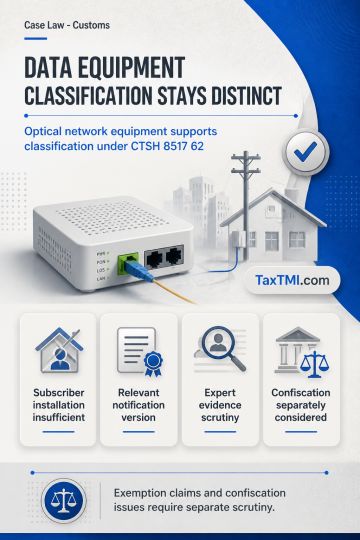
Data transmission equipment classification under CTSH 8517 62 remains distinct from residual classification, with exemption evidence requiring scrutin...
Section 44(1)(c) of the PMLA requires the court taking cognizance of the scheduled offence to commit that case to the PMLA Special Court, and the court has no discretion to refuse transfer on grounds of delay or an advanced stage of trial. Relying on Supreme Court authority, the High Court held that the statutory scheme mandates a common competent Special Court for the money-laundering complaint and the connected predicate offence. On the special facts, the predicate offence court was also a designated PMLA Special Court and therefore competent to try both matters, so the PMLA complaint was directed to be transferred there, while the broader jurisdictional question was left open.
Section 44(1)(c) of the PMLA requires the court taking cognizance of the scheduled offence to commit that case to the PMLA Special Court, and the court has no discretion to refuse transfer on grounds of delay or an advanced stage of trial. Relying on Supreme Court authority, the High Court held that the statutory scheme mandates a common competent Special Court for the money-laundering complaint and the connected predicate offence. On the special facts, the predicate offence court was also a designated PMLA Special Court and therefore competent to try both matters, so the PMLA complaint was directed to be transferred there, while the broader jurisdictional question was left open.
Note: It is a system-generated summary and is for quick reference only.
 TaxTMI
  TaxTMI
 of 4824



















 Join Channel