Retention of seized property survives where recorded reasons support proceeds of crime, while stayed investigation periods are excluded from limitatio...
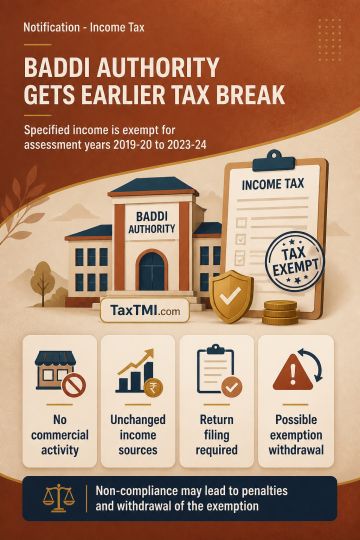
Specified income of Baddi Barotiwala Nalagarh Development Authority receives conditional tax exemption, retrospectively covering its designated assess...
Specified development authority income receives retrospective tax exemption, subject to non-commercial activity, unchanged income sources, and return-...
Unified Brand India framework introduces voluntary Trust Mark certification and funding support for export branding, packaging and global promotional ...
Origin Declaration authentication governs preferential tariff claims under India-UK CETA, requiring a validated reference number before import clearan...
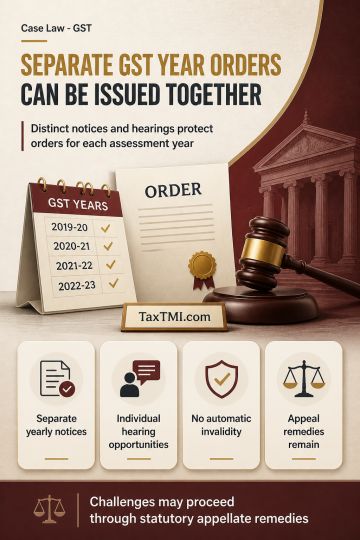
Separate assessment orders for different years remain valid when distinct notices and hearing opportunities prevent prejudice from combined proceeding...
Page of 4824
Press 'Enter' after typing page number.
1601 to 1620 of 96463 Results
❮
❯
❯❯
0 / 200
Expand Note
Add to Folder
No Folders have been created
+
Are you sure you want to delete "My most important" ?
Rule 48(2) of the NCLT Rules governs restoration of a petition dismissed for non-appearance and requires an application within thirty days on showing sufficient cause. The NCLAT held that a restoration request filed about five months after dismissal for non-prosecution was time-barred and could not be saved by inherent powers under Rule 11 or the general power to extend time under Rule 15, because those powers cannot override an express procedural mandate. It also found no sufficient cause for condonation, noting repeated absence, prolonged non-prosecution and inadequate vigilance despite reliance on counsel's lapse. The rejection of restoration was upheld.
Rule 48(2) of the NCLT Rules governs restoration of a petition dismissed for non-appearance and requires an application within thirty days on showing sufficient cause. The NCLAT held that a restoration request filed about five months after dismissal for non-prosecution was time-barred and could not be saved by inherent powers under Rule 11 or the general power to extend time under Rule 15, because those powers cannot override an express procedural mandate. It also found no sufficient cause for condonation, noting repeated absence, prolonged non-prosecution and inadequate vigilance despite reliance on counsel's lapse. The rejection of restoration was upheld.
Note: It is a system-generated summary and is for quick reference only.
 TaxTMI
  TaxTMI
 of 4824
















 Join Channel