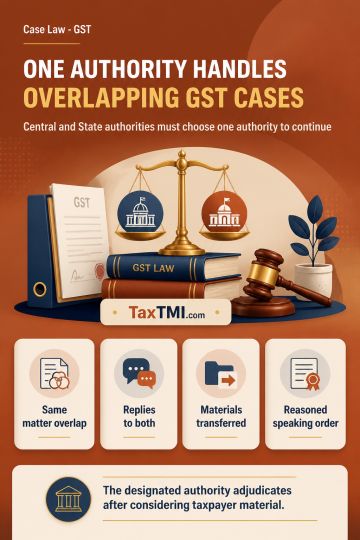
Overlapping GST proceedings require Central and State authorities to designate one competent authority for coordinated adjudication of the same matter...
Composite healthcare supplies retain exemption when patient care is the contract's essential character, despite payment through an implementing agency...
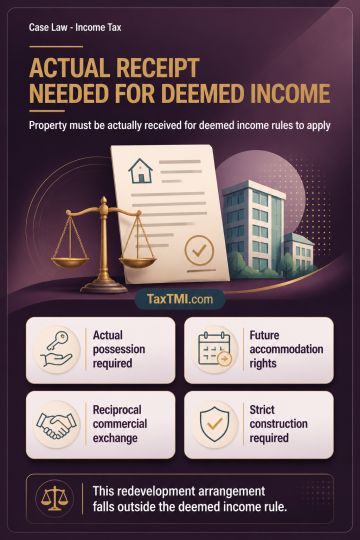
Receipt of immovable property requires actual possession or enjoyment; redevelopment allotments exchanged for tenancy rights fall outside deemed incom...
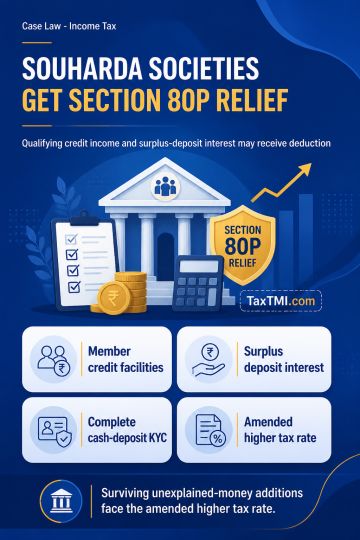
Section 80P deduction covers Souharda credit societies, including qualifying surplus-deposit interest, subject to member KYC verification for cash dep...
Page of 4826
Press 'Enter' after typing page number.
1441 to 1460 of 96510 Results
❮
❯
❯❯
0 / 200
Expand Note
Add to Folder
No Folders have been created
+
Are you sure you want to delete "My most important" ?
Rule 48(2) of the NCLT Rules governs restoration of a petition dismissed for non-appearance and requires an application within thirty days on showing sufficient cause. The NCLAT held that a restoration request filed about five months after dismissal for non-prosecution was time-barred and could not be saved by inherent powers under Rule 11 or the general power to extend time under Rule 15, because those powers cannot override an express procedural mandate. It also found no sufficient cause for condonation, noting repeated absence, prolonged non-prosecution and inadequate vigilance despite reliance on counsel's lapse. The rejection of restoration was upheld.
Rule 48(2) of the NCLT Rules governs restoration of a petition dismissed for non-appearance and requires an application within thirty days on showing sufficient cause. The NCLAT held that a restoration request filed about five months after dismissal for non-prosecution was time-barred and could not be saved by inherent powers under Rule 11 or the general power to extend time under Rule 15, because those powers cannot override an express procedural mandate. It also found no sufficient cause for condonation, noting repeated absence, prolonged non-prosecution and inadequate vigilance despite reliance on counsel's lapse. The rejection of restoration was upheld.
Note: It is a system-generated summary and is for quick reference only.
 TaxTMI
  TaxTMI
 of 4826







 Join Channel