Origin Declaration authentication governs preferential tariff claims under India-UK CETA, requiring a validated reference number before import clearan...
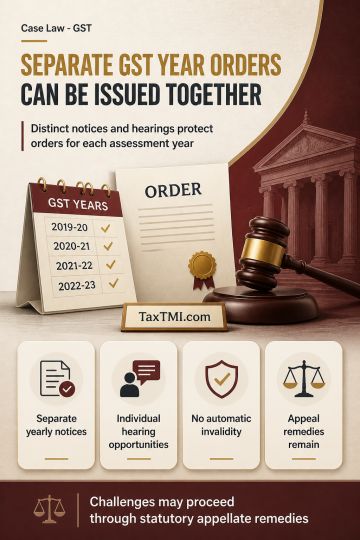
Separate assessment orders for different years remain valid when distinct notices and hearing opportunities prevent prejudice from combined proceeding...
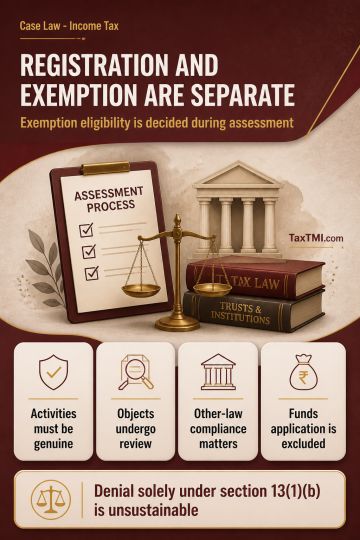
Defined public benefit can retain charitable character; registration renewal requires examining genuine activities and legal compliance, not surplus a...
Capital reduction is distinct from share buy-back, preventing buy-back tax; restructuring interest and related business deductions also survive scruti...
The ITAT held that irrecoverable driver and employee balances written off were allowable as business loss, as the facts were identical to an earlier year in the assessee's own case and no distinguishing feature was shown by the Revenue; the disallowance was therefore unsustainable on the principle of consistency. It further held that a bad debt claim cannot be denied merely because the assessee did not prove exhaustive recovery efforts, since after the statutory amendment and the Supreme Court's ruling in TRF Ltd., the governing requirement is write-off in the accounts. The additions on account of both items were directed to be deleted.
The ITAT held that irrecoverable driver and employee balances written off were allowable as business loss, as the facts were identical to an earlier year in the assessee's own case and no distinguishing feature was shown by the Revenue; the disallowance was therefore unsustainable on the principle of consistency. It further held that a bad debt claim cannot be denied merely because the assessee did not prove exhaustive recovery efforts, since after the statutory amendment and the Supreme Court's ruling in TRF Ltd., the governing requirement is write-off in the accounts. The additions on account of both items were directed to be deleted.
Note: It is a system-generated summary and is for quick reference only.
 TaxTMI
  TaxTMI
 of 4821














 Join Channel




