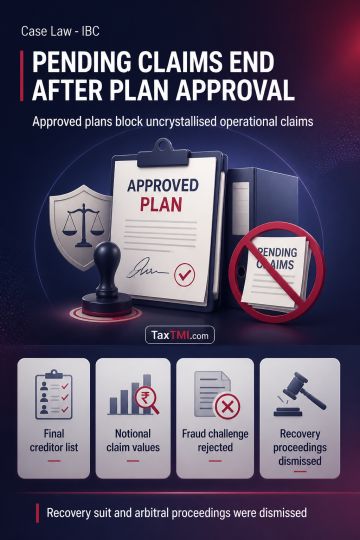
Clean slate principle extinguishes uncrystallised operational claims and bars continuation of pending recovery and arbitral proceedings after plan app...
Works contract classification governs composite layout-development contracts where VAT-paid goods are transferred alongside construction and infrastru...
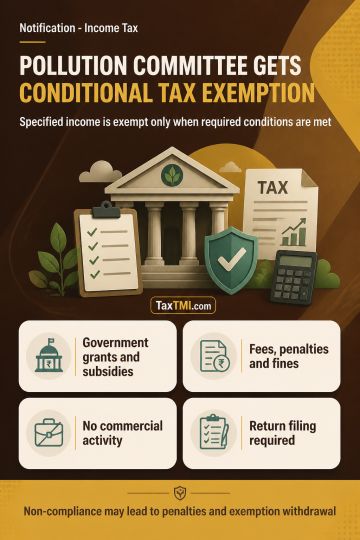
Specified income tax exemption for pollution control body remains conditional on non-commercial activity, unchanged income character, and return filin...
Jurisdictional facts in certificate-of-origin discrepancies can support customs show-cause proceedings, leaving factual explanations for departmental ...
The ITAT held that irrecoverable driver and employee balances written off were allowable as business loss, as the facts were identical to an earlier year in the assessee's own case and no distinguishing feature was shown by the Revenue; the disallowance was therefore unsustainable on the principle of consistency. It further held that a bad debt claim cannot be denied merely because the assessee did not prove exhaustive recovery efforts, since after the statutory amendment and the Supreme Court's ruling in TRF Ltd., the governing requirement is write-off in the accounts. The additions on account of both items were directed to be deleted.
The ITAT held that irrecoverable driver and employee balances written off were allowable as business loss, as the facts were identical to an earlier year in the assessee's own case and no distinguishing feature was shown by the Revenue; the disallowance was therefore unsustainable on the principle of consistency. It further held that a bad debt claim cannot be denied merely because the assessee did not prove exhaustive recovery efforts, since after the statutory amendment and the Supreme Court's ruling in TRF Ltd., the governing requirement is write-off in the accounts. The additions on account of both items were directed to be deleted.
Note: It is a system-generated summary and is for quick reference only.
 TaxTMI
  TaxTMI
 of 4823














 Join Channel