Rectification of mistake remains limited to self-evident record errors, preventing merits review through miscellaneous applications and preserving fin...
Tender creditworthiness conditions may extend to de facto Promoter Directors, with post-participation challenges generally barred absent arbitrariness...
Corporate representation in PMLA summons proceedings permitted through an authorised signatory, subject to directors' continuing cooperation and atten...
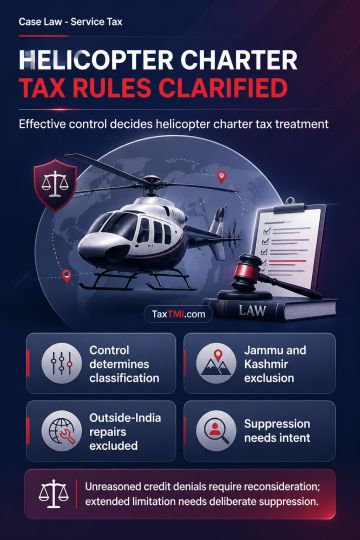
Helicopter charter classification requires effective control analysis, while territorial performance, reasoned credit orders and wilful suppression de...
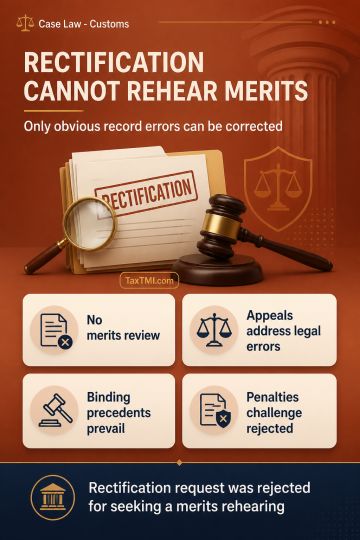
Section 420 of the Companies Act confers only a limited power on the Tribunal to rectify a mistake apparent from the record within the prescribed period; it does not give a party a right to seek review or reconsideration on merits. An application styled as rectification but directed at recalling disclosure, attachment and restraint directions was treated as a review petition in substance and held not maintainable. The Appellate Tribunal relied on the principle that an error requiring reappraisal or a different view on merits is not a patent mistake capable of rectification. The refusal to recall the earlier order was therefore upheld and the appeal dismissed.
Section 420 of the Companies Act confers only a limited power on the Tribunal to rectify a mistake apparent from the record within the prescribed period; it does not give a party a right to seek review or reconsideration on merits. An application styled as rectification but directed at recalling disclosure, attachment and restraint directions was treated as a review petition in substance and held not maintainable. The Appellate Tribunal relied on the principle that an error requiring reappraisal or a different view on merits is not a patent mistake capable of rectification. The refusal to recall the earlier order was therefore upheld and the appeal dismissed.
Note: It is a system-generated summary and is for quick reference only.
 TaxTMI
  TaxTMI
 of 4828













 Join Channel