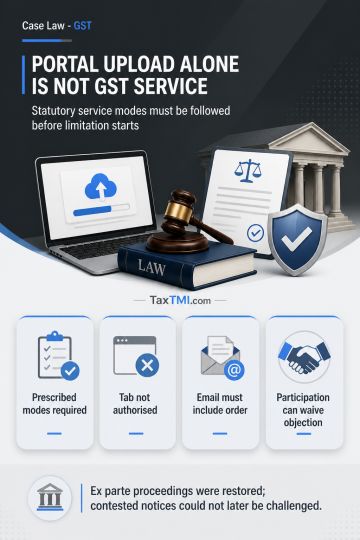
Cooperative society deposits, member-interest TDS exemption and credit-facility deduction claims require verification through records and supporting e...
Customs jurisdiction over EPCG condition breaches survives export-obligation discharge certificates, requiring alleged fraud and misdeclaration to be ...
Contractual tolerance requires consideration; breach recoveries, qualifying public infrastructure services and road works escape service tax liability...
Section 420 of the Companies Act confers only a limited power on the Tribunal to rectify a mistake apparent from the record within the prescribed period; it does not give a party a right to seek review or reconsideration on merits. An application styled as rectification but directed at recalling disclosure, attachment and restraint directions was treated as a review petition in substance and held not maintainable. The Appellate Tribunal relied on the principle that an error requiring reappraisal or a different view on merits is not a patent mistake capable of rectification. The refusal to recall the earlier order was therefore upheld and the appeal dismissed.
Section 420 of the Companies Act confers only a limited power on the Tribunal to rectify a mistake apparent from the record within the prescribed period; it does not give a party a right to seek review or reconsideration on merits. An application styled as rectification but directed at recalling disclosure, attachment and restraint directions was treated as a review petition in substance and held not maintainable. The Appellate Tribunal relied on the principle that an error requiring reappraisal or a different view on merits is not a patent mistake capable of rectification. The refusal to recall the earlier order was therefore upheld and the appeal dismissed.
Note: It is a system-generated summary and is for quick reference only.
 TaxTMI
  TaxTMI
 of 4828


















 Join Channel