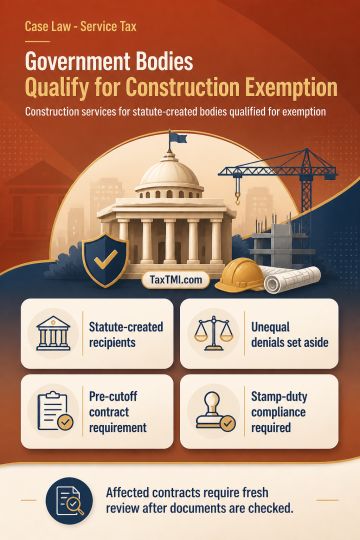
Governmental authority status supports construction-service exemption, while pre-cutoff contract and stamp-duty compliance requires verification on re...
Automated Free Sale and Commerce Certificates enable paperless processing while retaining risk-based manual verification for selected exporter applica...
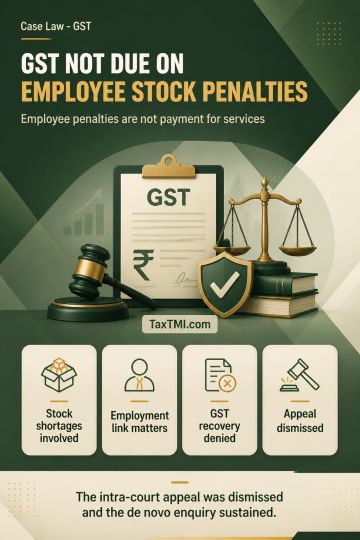
Employee stock-shortage penalties do not constitute consideration for services, preventing GST collection under Schedule II in employment relationship...
In real estate anti-profiteering analysis, the governing approach is to test project-level GST savings by comparing credit availed to purchase value in the pre-GST and post-GST periods. Applying that method, the Tribunal accepted the DGAP's use of purchase-value ratios, excluded reversed credit and units outside the relevant pre-occupancy sale pool, and held that no additional benefit had accrued to the developer. It also accepted that ledger adjustments could evidence passing on of input tax credit, and that the EPC contractor was not the supplier to homebuyers. The objections to methodology, verification, and alleged inconsistency were rejected, and no contravention of Section 171 was found.
In real estate anti-profiteering analysis, the governing approach is to test project-level GST savings by comparing credit availed to purchase value in the pre-GST and post-GST periods. Applying that method, the Tribunal accepted the DGAP's use of purchase-value ratios, excluded reversed credit and units outside the relevant pre-occupancy sale pool, and held that no additional benefit had accrued to the developer. It also accepted that ledger adjustments could evidence passing on of input tax credit, and that the EPC contractor was not the supplier to homebuyers. The objections to methodology, verification, and alleged inconsistency were rejected, and no contravention of Section 171 was found.
Note: It is a system-generated summary and is for quick reference only.
 TaxTMI
  TaxTMI
 of 4828









 Join Channel


