Political contribution deductions require genuine transactions; banking records and party registration alone cannot defeat evidence of accommodation e...
Post-death GST liability permits fresh proceedings against legal representatives, while discontinued-business recovery remains limited to the inherite...
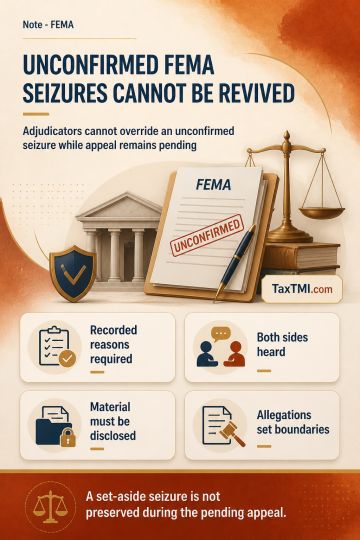
Non-confirmation of FEMA seizure prevents adjudicators from overriding pending appellate findings on recorded reasons and suspected foreign asset hold...
In real estate anti-profiteering analysis, the governing approach is to test project-level GST savings by comparing credit availed to purchase value in the pre-GST and post-GST periods. Applying that method, the Tribunal accepted the DGAP's use of purchase-value ratios, excluded reversed credit and units outside the relevant pre-occupancy sale pool, and held that no additional benefit had accrued to the developer. It also accepted that ledger adjustments could evidence passing on of input tax credit, and that the EPC contractor was not the supplier to homebuyers. The objections to methodology, verification, and alleged inconsistency were rejected, and no contravention of Section 171 was found.
In real estate anti-profiteering analysis, the governing approach is to test project-level GST savings by comparing credit availed to purchase value in the pre-GST and post-GST periods. Applying that method, the Tribunal accepted the DGAP's use of purchase-value ratios, excluded reversed credit and units outside the relevant pre-occupancy sale pool, and held that no additional benefit had accrued to the developer. It also accepted that ledger adjustments could evidence passing on of input tax credit, and that the EPC contractor was not the supplier to homebuyers. The objections to methodology, verification, and alleged inconsistency were rejected, and no contravention of Section 171 was found.
Note: It is a system-generated summary and is for quick reference only.
 TaxTMI
  TaxTMI