Transfer pricing and tax deductions upheld on established principles, while employee contributions and warranty provisions returned for fresh examinat...
Captive transfer pricing relies on industrial consumer tariffs, while genuine quotations can benchmark effluent treatment transfers under the Other Me...
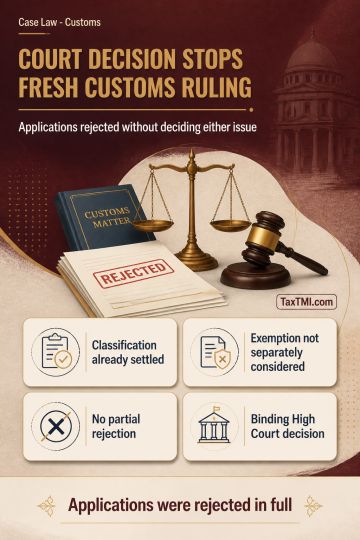
Specific tariff classification for ophthalmic instruments and extended limitation principles determine the treatment of duty demands, confiscation, an...
Integrated golf function determines classification, placing launch monitors and simulators under other golf equipment rather than measuring instrument...
Public servant status under anti-corruption law extends to recognised stock exchange leadership; constitutional and sanction challenges do not succeed...
Acquiescence, homebuyer protection and clean-slate resolution principles prevent landowners from disrupting an integrated project through late termina...
ITAT held that the subscription and sale of compulsorily convertible debentures were genuine transactions arising from financial compulsion in a distressed family business, not a colourable device to offset capital gains. The Department had not shown that the underlying project, bank borrowings, mortgage of the jointly owned property, CCD subscription through banking channels, or sale based on an independent valuation were sham or collusive. Mere doubt over commercial prudence was insufficient to deny the statutory set-off of the resulting short-term capital loss, and suspicion alone could not justify disallowance. The Revenue's appeals were dismissed.
ITAT held that the subscription and sale of compulsorily convertible debentures were genuine transactions arising from financial compulsion in a distressed family business, not a colourable device to offset capital gains. The Department had not shown that the underlying project, bank borrowings, mortgage of the jointly owned property, CCD subscription through banking channels, or sale based on an independent valuation were sham or collusive. Mere doubt over commercial prudence was insufficient to deny the statutory set-off of the resulting short-term capital loss, and suspicion alone could not justify disallowance. The Revenue's appeals were dismissed.
Note: It is a system-generated summary and is for quick reference only.
 TaxTMI
  TaxTMI
 of 4828

















 Join Channel