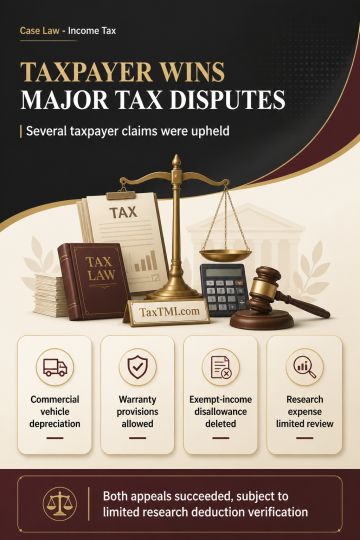
Commercial vehicle depreciation, scientifically determined warranty provisions and exempt-income disallowances were resolved in favour of the taxpayer...
Inherited property sale proceeds require capital-gains treatment where ownership is supported by evidence, not suspicion or unverified signature doubt...
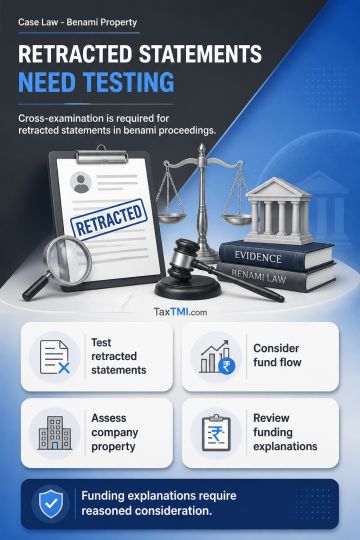
Cross-examination of retracted statements is essential where foundational evidence supports a benami allegation and documented funding explanations re...
Capital-goods exemption covers plant-modernisation accessories, while the import restriction applies only to earlier capital-goods components and spar...
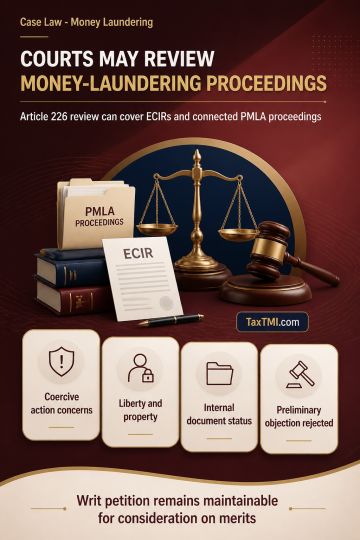
Constitutional judicial review permits challenges to ECIRs and connected money-laundering proceedings where coercive action affects fundamental intere...
GST offences involving liability below the statutory threshold are treated as non-cognizable and bailable under Section 132 of the CGST/CGGST Act, 2017. The High Court noted that the proceedings against the applicant related to a GST liability of less than Rs. 5 crore and held that, on that basis, the alleged offence did not justify an apprehension of arrest. The plea for anticipatory bail under Section 482 BNSS was therefore found to be without merit and was rejected.
GST offences involving liability below the statutory threshold are treated as non-cognizable and bailable under Section 132 of the CGST/CGGST Act, 2017. The High Court noted that the proceedings against the applicant related to a GST liability of less than Rs. 5 crore and held that, on that basis, the alleged offence did not justify an apprehension of arrest. The plea for anticipatory bail under Section 482 BNSS was therefore found to be without merit and was rejected.
Note: It is a system-generated summary and is for quick reference only.
 TaxTMI
  TaxTMI
 of 4809









 Join Channel


