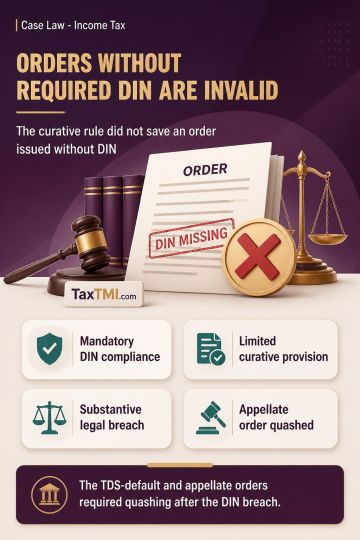
Document Identification Number compliance renders TDS-default orders invalid where mandatory DIN requirements are breached and curative provision does...
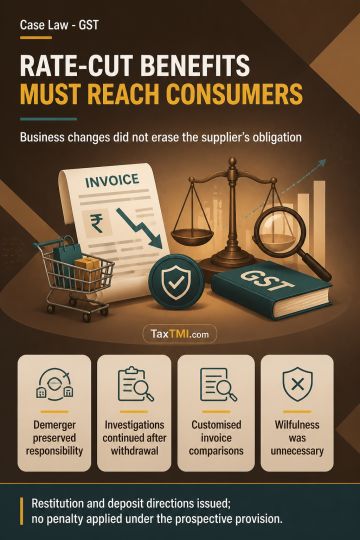
Anti-profiteering obligations survive business demerger, complaint withdrawal, and customized supply arrangements where rate-reduction benefits are no...
GST offences involving liability below the statutory threshold are treated as non-cognizable and bailable under Section 132 of the CGST/CGGST Act, 2017. The High Court noted that the proceedings against the applicant related to a GST liability of less than Rs. 5 crore and held that, on that basis, the alleged offence did not justify an apprehension of arrest. The plea for anticipatory bail under Section 482 BNSS was therefore found to be without merit and was rejected.
GST offences involving liability below the statutory threshold are treated as non-cognizable and bailable under Section 132 of the CGST/CGGST Act, 2017. The High Court noted that the proceedings against the applicant related to a GST liability of less than Rs. 5 crore and held that, on that basis, the alleged offence did not justify an apprehension of arrest. The plea for anticipatory bail under Section 482 BNSS was therefore found to be without merit and was rejected.
Note: It is a system-generated summary and is for quick reference only.
 TaxTMI
  TaxTMI