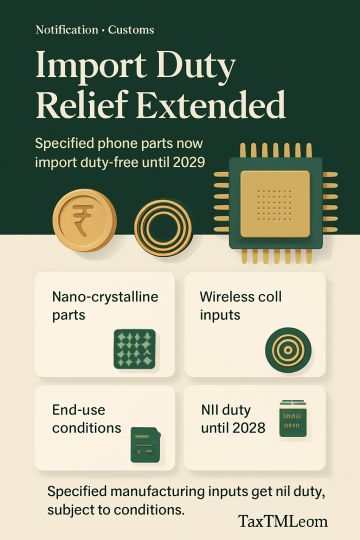
BCD exemption for specified display assembly inputs extended for automotive, medical and industrial applications, with defined exclusions and sunset d...
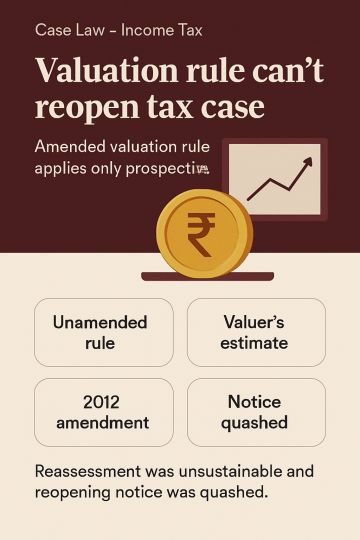
Prospective valuation amendment limits reassessment: unamended fair market value reference could not justify reopening based on a registered valuer's ...
Page of 4828
Press 'Enter' after typing page number.
1861 to 1880 of 96556 Results
❮
❯
❯❯
0 / 200
Expand Note
Add to Folder
No Folders have been created
+
Are you sure you want to delete "My most important" ?
A challenge to statutory summons under Section 131(1A) failed because mala fides were not proved by clear evidence, and the petitioner's reliance on later-produced material did not displace the prior TEP basis or the respondents' denial. The High Court also held that an Income Tax Officer authorised under the statutory scheme was competent to issue the summons, so no jurisdictional infirmity or colourable exercise of power was shown. It further accepted that, at the summons stage, the investigating authority was not required to disclose the detailed reasons, source of information, or scope of the ongoing inquiry, since confidentiality of an active tax investigation could be maintained without invalidating the summons.
A challenge to statutory summons under Section 131(1A) failed because mala fides were not proved by clear evidence, and the petitioner's reliance on later-produced material did not displace the prior TEP basis or the respondents' denial. The High Court also held that an Income Tax Officer authorised under the statutory scheme was competent to issue the summons, so no jurisdictional infirmity or colourable exercise of power was shown. It further accepted that, at the summons stage, the investigating authority was not required to disclose the detailed reasons, source of information, or scope of the ongoing inquiry, since confidentiality of an active tax investigation could be maintained without invalidating the summons.
Note: It is a system-generated summary and is for quick reference only.
 TaxTMI
  TaxTMI
 of 4828









 Join Channel