Defined public benefit can retain charitable character; registration renewal requires examining genuine activities and legal compliance, not surplus a...
Capital reduction is distinct from share buy-back, preventing buy-back tax; restructuring interest and related business deductions also survive scruti...
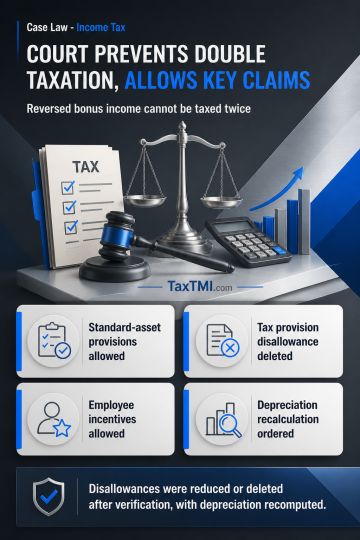
Transfer pricing and tax deductions upheld on established principles, while employee contributions and warranty provisions returned for fresh examinat...
Captive transfer pricing relies on industrial consumer tariffs, while genuine quotations can benchmark effluent treatment transfers under the Other Me...
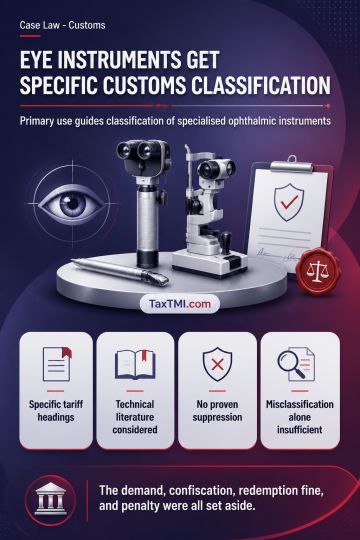
Specific tariff classification for ophthalmic instruments and extended limitation principles determine the treatment of duty demands, confiscation, an...
Integrated golf function determines classification, placing launch monitors and simulators under other golf equipment rather than measuring instrument...
A challenge to statutory summons under Section 131(1A) failed because mala fides were not proved by clear evidence, and the petitioner's reliance on later-produced material did not displace the prior TEP basis or the respondents' denial. The High Court also held that an Income Tax Officer authorised under the statutory scheme was competent to issue the summons, so no jurisdictional infirmity or colourable exercise of power was shown. It further accepted that, at the summons stage, the investigating authority was not required to disclose the detailed reasons, source of information, or scope of the ongoing inquiry, since confidentiality of an active tax investigation could be maintained without invalidating the summons.
A challenge to statutory summons under Section 131(1A) failed because mala fides were not proved by clear evidence, and the petitioner's reliance on later-produced material did not displace the prior TEP basis or the respondents' denial. The High Court also held that an Income Tax Officer authorised under the statutory scheme was competent to issue the summons, so no jurisdictional infirmity or colourable exercise of power was shown. It further accepted that, at the summons stage, the investigating authority was not required to disclose the detailed reasons, source of information, or scope of the ongoing inquiry, since confidentiality of an active tax investigation could be maintained without invalidating the summons.
Note: It is a system-generated summary and is for quick reference only.
 TaxTMI
  TaxTMI
 of 4828


















 Join Channel


