Building-plan sanction charges require statutory authority; unauthorised fees and GST were quashed, while labour cess must follow prescribed collectio...
Pure-agent exclusion fails where hotel booking facilitators receive third-party services themselves, making entire customer consideration taxable as r...
Transfer pricing requires evidence for AMP transactions, functionally reliable comparables, and appropriate aggregation or Berry Ratio benchmarking me...
Revisionary jurisdiction cannot reopen share capital assessments where adequate inquiry supports a permissible view and no independent error is establ...
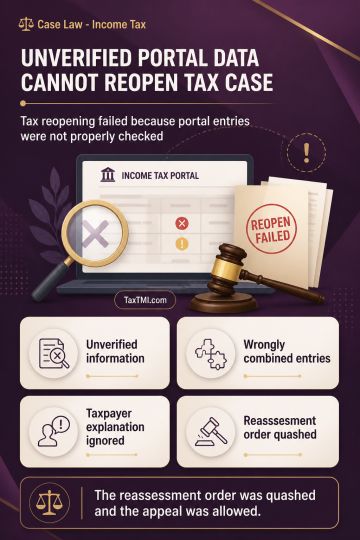
Reassessment jurisdiction fails where unverified portal information is aggregated without examining the taxpayer's explanation or relevance of entries...
Statutory sanction for delayed reassessment requires approval from the prescribed authority; approval by an inferior authority invalidates jurisdictio...
Transfer pricing margin adjustments require matching treatment of non-operating income and related costs, with comparability issues reconsidered on ev...
Preliminary-expense amortisation and MAT exempt-income adjustments prevailed, while trademark costs and managerial remuneration require fresh verifica...
Page of 4819
Press 'Enter' after typing page number.
501 to 520 of 96365 Results
❮
❯
❯❯
0 / 200
Expand Note
Add to Folder
No Folders have been created
+
Are you sure you want to delete "My most important" ?
Fraudulent preference transfers by a company shortly before winding up are void ab initio when designed to defeat creditors; such transfers differ from otherwise bona fide transactions that may be avoidable under a separate provision requiring good faith and valuable consideration. A related-party lease of significant company assets executed immediately prior to the winding-up petition was held sham, not at arm's length, and void from inception; the official liquidator's application to take possession and sell the property for creditor realization should not have been dismissed on limitation grounds. The appellate court allowed the appeal and declared the transfer void.
Fraudulent preference transfers by a company shortly before winding up are void ab initio when designed to defeat creditors; such transfers differ from otherwise bona fide transactions that may be avoidable under a separate provision requiring good faith and valuable consideration. A related-party lease of significant company assets executed immediately prior to the winding-up petition was held sham, not at arm's length, and void from inception; the official liquidator's application to take possession and sell the property for creditor realization should not have been dismissed on limitation grounds. The appellate court allowed the appeal and declared the transfer void.
Note: It is a system-generated summary and is for quick reference only.
 TaxTMI
  TaxTMI
 of 4819





















 Join Channel