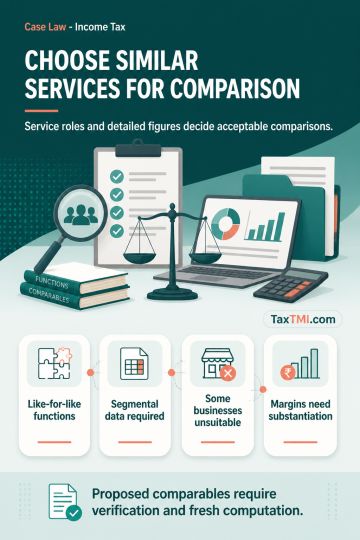
Functional comparability governs selection of support-service and IT-enabled service comparables, with verification required for unresolved data and m...
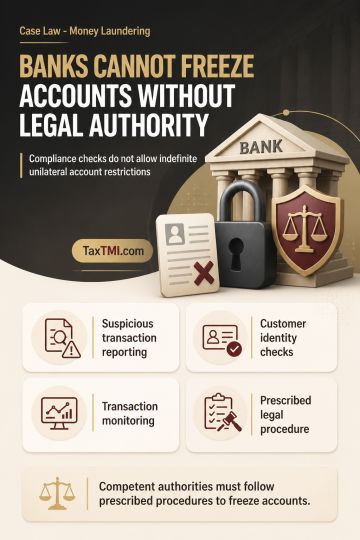
Bank account freezing requires statutory authority; anti-money-laundering compliance and KYC monitoring do not permit unilateral indefinite restrictio...
Reverse charge mechanism for service tax distinguishes the recipients liability from the providers: where law makes the service recipient solely liable to pay, the provider is not answerable for unpaid tax. The Revenue bears the burden to prove fraud, collusion, wilful misstatement or suppression of facts before invoking the extended period of limitation; absent such proof and where the provider had a bona fide belief that liability rested on the recipient, an extended-period demand against the provider cannot be sustained. Result: impugned extended-period demand set aside and appeal allowed.
Reverse charge mechanism for service tax distinguishes the recipients liability from the providers: where law makes the service recipient solely liable to pay, the provider is not answerable for unpaid tax. The Revenue bears the burden to prove fraud, collusion, wilful misstatement or suppression of facts before invoking the extended period of limitation; absent such proof and where the provider had a bona fide belief that liability rested on the recipient, an extended-period demand against the provider cannot be sustained. Result: impugned extended-period demand set aside and appeal allowed.
Note: It is a system-generated summary and is for quick reference only.
 TaxTMI
  TaxTMI
 of 4828





 Join Channel