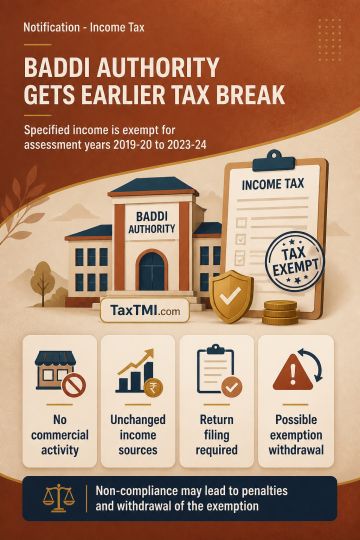
Specified income of Baddi Barotiwala Nalagarh Development Authority receives conditional tax exemption, retrospectively covering its designated assess...
Specified development authority income receives retrospective tax exemption, subject to non-commercial activity, unchanged income sources, and return-...
Unified Brand India framework introduces voluntary Trust Mark certification and funding support for export branding, packaging and global promotional ...
Origin Declaration authentication governs preferential tariff claims under India-UK CETA, requiring a validated reference number before import clearan...
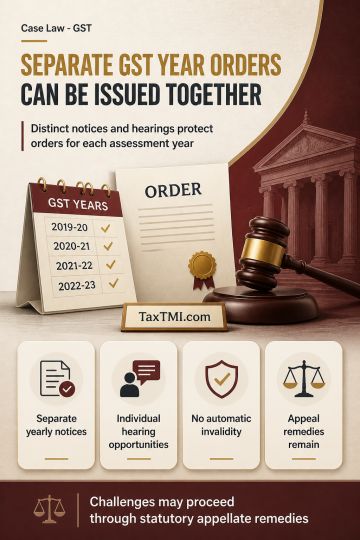
Separate assessment orders for different years remain valid when distinct notices and hearing opportunities prevent prejudice from combined proceeding...
Section 107(4) permits a discretionary additional thirty days beyond the primary ninety-day limitation if the appellant shows sufficient cause, and that discretionary period is exhaustive; courts constitutional writ jurisdiction cannot be used to further extend the statutory timeline beyond the total 120 days. Reasons not meeting the sufficient cause standard will not support condonation. Where an alternative efficacious remedy in the statute has been availed, the validity of the original demand order cannot be re-opened via a collateral constitutional challenge. Taxing statutes operate within strict time frames, placing a duty on taxpayers to monitor proceedings and verify orders on the portal.
Section 107(4) permits a discretionary additional thirty days beyond the primary ninety-day limitation if the appellant shows sufficient cause, and that discretionary period is exhaustive; courts constitutional writ jurisdiction cannot be used to further extend the statutory timeline beyond the total 120 days. Reasons not meeting the sufficient cause standard will not support condonation. Where an alternative efficacious remedy in the statute has been availed, the validity of the original demand order cannot be re-opened via a collateral constitutional challenge. Taxing statutes operate within strict time frames, placing a duty on taxpayers to monitor proceedings and verify orders on the portal.
Note: It is a system-generated summary and is for quick reference only.
 TaxTMI
 of 4798















 Join Channel


 TaxTMI
