Necessary-party requirements limit impleadment of independent entities, while deferred consideration does not create an appealable adverse determinati...
Food supplement classification requires common parlance and authoritative tests, preventing treatment as proprietary Ayurvedic medicines without suppo...
Specified regulatory authority income receives conditional tax exemption, subject to non-commercial activity, unchanged income character, and return f...
Tax exemption for regulatory authority income applies retrospectively, subject to non-commercial activity, unchanged income sources, and return-filing...
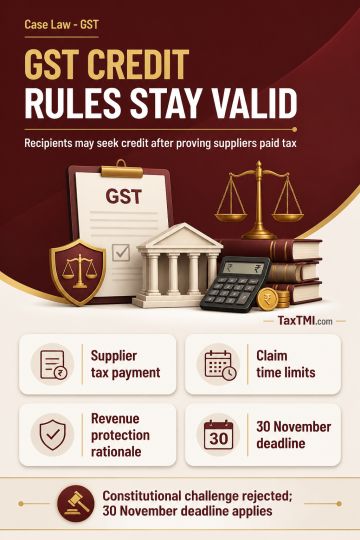
Input tax credit conditions remain constitutionally valid, with eligible recipient claims considered under GST circulars and retrospective filing dead...
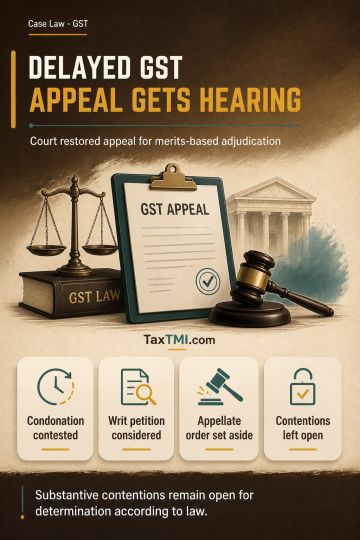
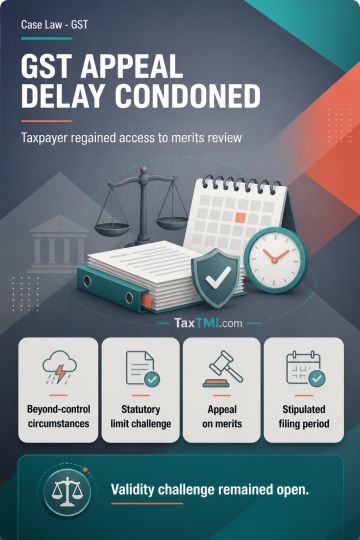
Section 107(4) permits a discretionary additional thirty days beyond the primary ninety-day limitation if the appellant shows sufficient cause, and that discretionary period is exhaustive; courts constitutional writ jurisdiction cannot be used to further extend the statutory timeline beyond the total 120 days. Reasons not meeting the sufficient cause standard will not support condonation. Where an alternative efficacious remedy in the statute has been availed, the validity of the original demand order cannot be re-opened via a collateral constitutional challenge. Taxing statutes operate within strict time frames, placing a duty on taxpayers to monitor proceedings and verify orders on the portal.
Section 107(4) permits a discretionary additional thirty days beyond the primary ninety-day limitation if the appellant shows sufficient cause, and that discretionary period is exhaustive; courts constitutional writ jurisdiction cannot be used to further extend the statutory timeline beyond the total 120 days. Reasons not meeting the sufficient cause standard will not support condonation. Where an alternative efficacious remedy in the statute has been availed, the validity of the original demand order cannot be re-opened via a collateral constitutional challenge. Taxing statutes operate within strict time frames, placing a duty on taxpayers to monitor proceedings and verify orders on the portal.
Note: It is a system-generated summary and is for quick reference only.
 TaxTMI
 of 4792



















 Join Channel


 TaxTMI