Business expenditure deduction requires proof of genuine commission payments and commercial allowability; turnover growth alone cannot validate the cl...
Article 8 treaty coverage excluded third-party airline support services, while documented demonetisation cash receipts remained accepted business inco...
Functional comparability under TNMM requires highway contract benchmarks to reflect operation, maintenance and transfer activities, requiring fresh be...
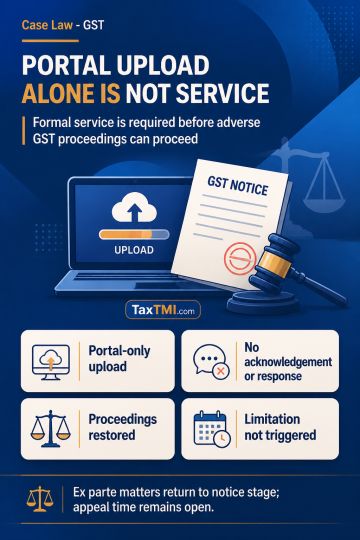
Section 107(4) permits a discretionary additional thirty days beyond the primary ninety-day limitation if the appellant shows sufficient cause, and that discretionary period is exhaustive; courts constitutional writ jurisdiction cannot be used to further extend the statutory timeline beyond the total 120 days. Reasons not meeting the sufficient cause standard will not support condonation. Where an alternative efficacious remedy in the statute has been availed, the validity of the original demand order cannot be re-opened via a collateral constitutional challenge. Taxing statutes operate within strict time frames, placing a duty on taxpayers to monitor proceedings and verify orders on the portal.
Section 107(4) permits a discretionary additional thirty days beyond the primary ninety-day limitation if the appellant shows sufficient cause, and that discretionary period is exhaustive; courts constitutional writ jurisdiction cannot be used to further extend the statutory timeline beyond the total 120 days. Reasons not meeting the sufficient cause standard will not support condonation. Where an alternative efficacious remedy in the statute has been availed, the validity of the original demand order cannot be re-opened via a collateral constitutional challenge. Taxing statutes operate within strict time frames, placing a duty on taxpayers to monitor proceedings and verify orders on the portal.
Note: It is a system-generated summary and is for quick reference only.
 TaxTMI
 of 4790












 Join Channel


 TaxTMI
