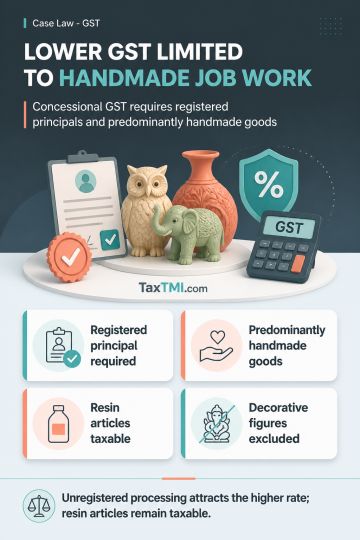
Handicraft job work receives concessional GST only for registered principals and predominantly handmade goods; commercial resin articles remain taxabl...
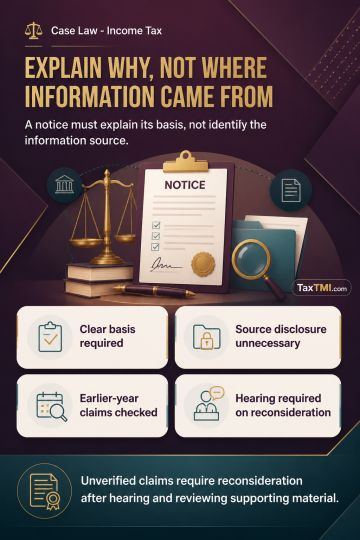
Reassessment disclosure requirements permit stated reasons without revealing information sources, but prior-taxation claims require full examination b...
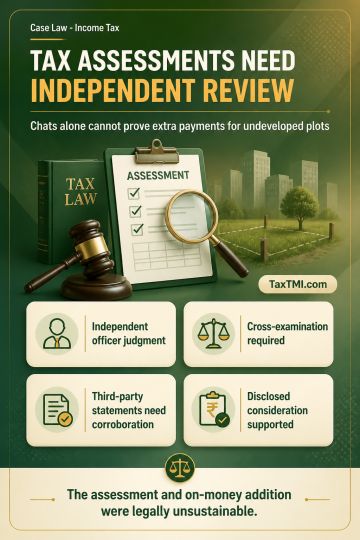
Independent assessment discretion and corroborated electronic evidence determine validity of on-money additions and undisclosed-consideration assessme...
Cotton waste sold by the assessee was treated by the AO as "scrap" liable to TCS under s. 206C. Interpreting the statutory definition of "scrap," the tribunal held that cotton waste used as raw material in open-ended spinning mills does not qualify as scrap, so s. 206C is inapplicable on such sales. Although the first appellate authority accepted non-taxability in principle, it denied relief for non-furnishing of Form 27C; the tribunal treated this as a curable technical lapse in light of binding precedent and noted that end-user declarations were produced. The matter was remitted to the AO to verify end-use and then allow relief accordingly; appeal was statistically allowed. - ITAT
Cotton waste sold by the assessee was treated by the AO as "scrap" liable to TCS under s. 206C. Interpreting the statutory definition of "scrap," the tribunal held that cotton waste used as raw material in open-ended spinning mills does not qualify as scrap, so s. 206C is inapplicable on such sales. Although the first appellate authority accepted non-taxability in principle, it denied relief for non-furnishing of Form 27C; the tribunal treated this as a curable technical lapse in light of binding precedent and noted that end-user declarations were produced. The matter was remitted to the AO to verify end-use and then allow relief accordingly; appeal was statistically allowed. - ITAT
Note: It is a system-generated summary and is for quick reference only.
 TaxTMI
  TaxTMI
 of 4828



 Join Channel


