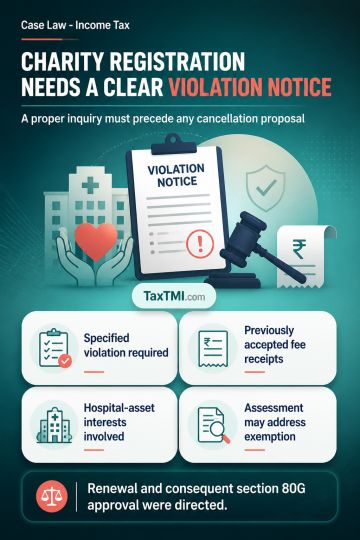
Charitable trust registration requires a specified-violation notice; settled cash deposits and related-party payments did not justify cancellation or ...
External development charges trigger TDS under section 194C, while disputed administrative payments require factual verification and fresh adjudicatio...
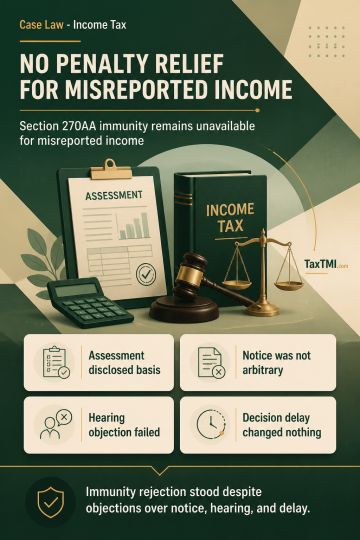
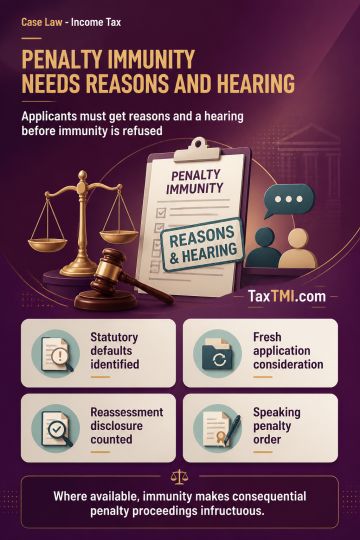
Section 270AA penalty immunity requires identified statutory defaults and a hearing before rejection; reassessment disclosure may constitute under-rep...
In a CIRP concerning a mixed-use real estate project, the dominant issue was whether extraordinary powers could be invoked to ensure an equitable resolution among competing stakeholders, particularly protecting homebuyers, where the ordinary CIRP architecture was viewed as inadequate to secure balanced outcomes. The Court accepted the amicus recommendations and stakeholder responses indicating broad confidence in a court-monitored mechanism, and held that the case warranted exercise of Article 142 to "do complete justice" while maintaining fidelity to IBC objectives. Consequently, it directed a court-appointed committee with judicial oversight to ensure continuity of the resolution process and safeguard homebuyers' rights. - SC
In a CIRP concerning a mixed-use real estate project, the dominant issue was whether extraordinary powers could be invoked to ensure an equitable resolution among competing stakeholders, particularly protecting homebuyers, where the ordinary CIRP architecture was viewed as inadequate to secure balanced outcomes. The Court accepted the amicus recommendations and stakeholder responses indicating broad confidence in a court-monitored mechanism, and held that the case warranted exercise of Article 142 to "do complete justice" while maintaining fidelity to IBC objectives. Consequently, it directed a court-appointed committee with judicial oversight to ensure continuity of the resolution process and safeguard homebuyers' rights. - SC
Note: It is a system-generated summary and is for quick reference only.
 TaxTMI
  TaxTMI
 of 4826
















 Join Channel


