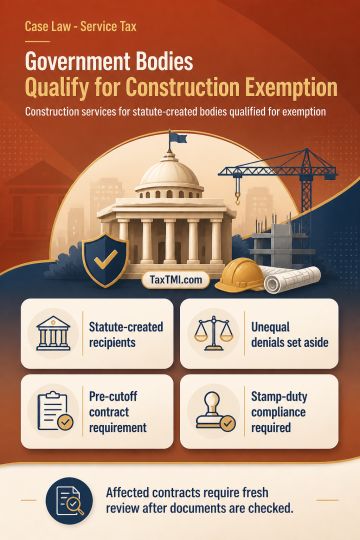
Governmental authority status supports construction-service exemption, while pre-cutoff contract and stamp-duty compliance requires verification on re...
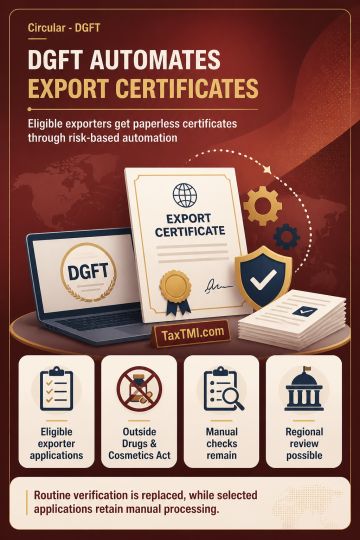
Automated Free Sale and Commerce Certificates enable paperless processing while retaining risk-based manual verification for selected exporter applica...
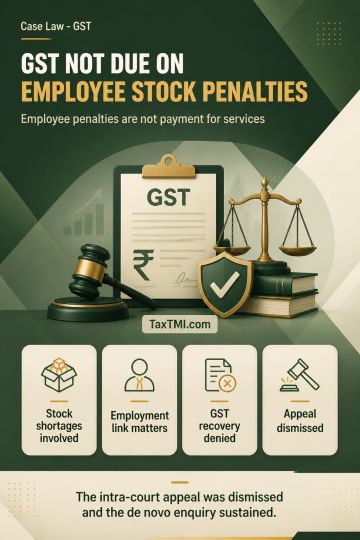
Employee stock-shortage penalties do not constitute consideration for services, preventing GST collection under Schedule II in employment relationship...
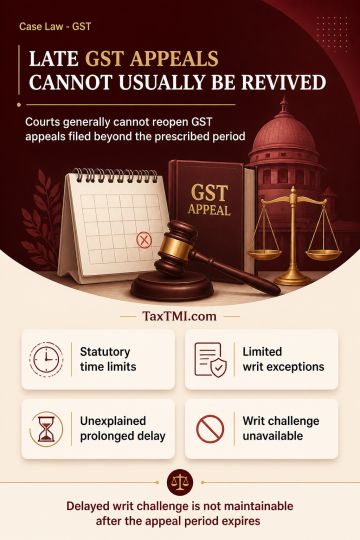
The dominant issue was whether a 2262-day delay in filing a statutory appeal should be condoned under Section 5 of the Limitation Act, 1963. Applying the liberal construction of "sufficient cause" to advance substantial justice, the court held that the tribunal erred in treating the appellant's inaction as "total negligence," particularly given the SC's directions excluding 15.03.2020 to 28.02.2022 for limitation due to COVID-19 and the impracticality of expecting daily portal monitoring. Since refusal would effectively bar scrutiny of a substantial penalty on merits, the delay was condoned and the question of law was answered in the appellant's favour. - HC
The dominant issue was whether a 2262-day delay in filing a statutory appeal should be condoned under Section 5 of the Limitation Act, 1963. Applying the liberal construction of "sufficient cause" to advance substantial justice, the court held that the tribunal erred in treating the appellant's inaction as "total negligence," particularly given the SC's directions excluding 15.03.2020 to 28.02.2022 for limitation due to COVID-19 and the impracticality of expecting daily portal monitoring. Since refusal would effectively bar scrutiny of a substantial penalty on merits, the delay was condoned and the question of law was answered in the appellant's favour. - HC
Note: It is a system-generated summary and is for quick reference only.
 TaxTMI
  TaxTMI
 of 4828



 Join Channel


