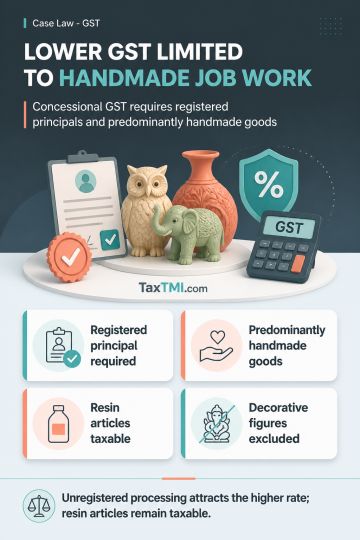
Handicraft job work receives concessional GST only for registered principals and predominantly handmade goods; commercial resin articles remain taxabl...
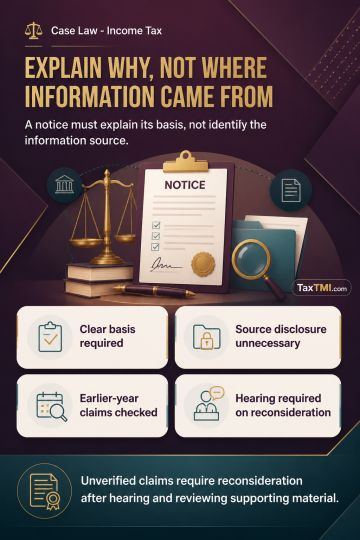
Reassessment disclosure requirements permit stated reasons without revealing information sources, but prior-taxation claims require full examination b...
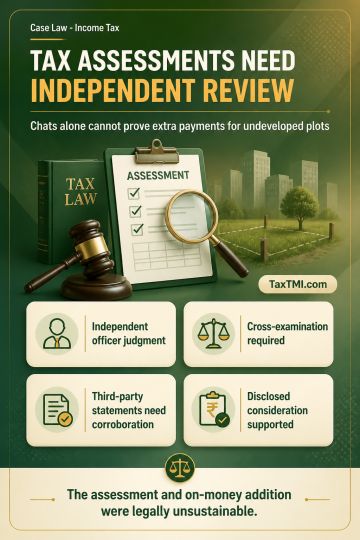
Independent assessment discretion and corroborated electronic evidence determine validity of on-money additions and undisclosed-consideration assessme...
The dominant issue was whether a 2262-day delay in filing a statutory appeal should be condoned under Section 5 of the Limitation Act, 1963. Applying the liberal construction of "sufficient cause" to advance substantial justice, the court held that the tribunal erred in treating the appellant's inaction as "total negligence," particularly given the SC's directions excluding 15.03.2020 to 28.02.2022 for limitation due to COVID-19 and the impracticality of expecting daily portal monitoring. Since refusal would effectively bar scrutiny of a substantial penalty on merits, the delay was condoned and the question of law was answered in the appellant's favour. - HC
The dominant issue was whether a 2262-day delay in filing a statutory appeal should be condoned under Section 5 of the Limitation Act, 1963. Applying the liberal construction of "sufficient cause" to advance substantial justice, the court held that the tribunal erred in treating the appellant's inaction as "total negligence," particularly given the SC's directions excluding 15.03.2020 to 28.02.2022 for limitation due to COVID-19 and the impracticality of expecting daily portal monitoring. Since refusal would effectively bar scrutiny of a substantial penalty on merits, the delay was condoned and the question of law was answered in the appellant's favour. - HC
Note: It is a system-generated summary and is for quick reference only.
 TaxTMI
  TaxTMI
 of 4828






 Join Channel


