Service of notice and contractual debt acknowledgment preserved insolvency admission against a corporate guarantor despite limitation and natural just...
Original works exemption excludes standalone boulder transportation, leaving subcontracted railway-project transport services subject to service tax l...
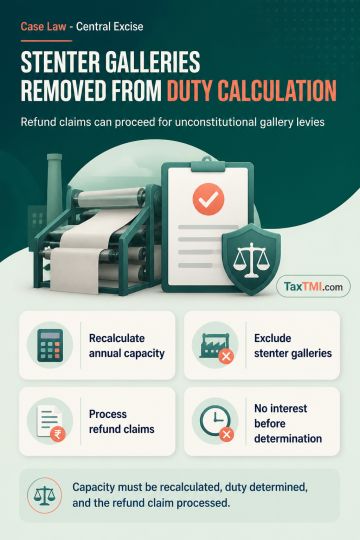
Annual production capacity determinations excluding stenter galleries support refunds for unconstitutional excise levies without an unjust-enrichment ...
Vicarious liability for cheque dishonour requires specific allegations of responsibility and cheque signatory; generic director allegations cannot sus...
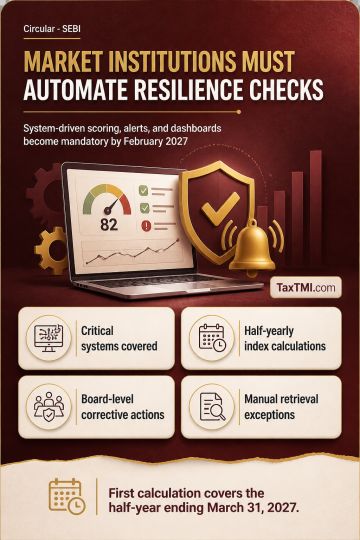
IT Resilience Index requires market infrastructure institutions to automate resilience scoring, early warnings, and continuous service-delivery monito...
Reopening under ss. 148A(3)/148 was challenged on the ground that the alleged escapement based on stamp duty valuation mismatch and payment routing to a confirming party could not trigger s. 56(2)(x) where the land was held as stock-in-trade. The Court held that s. 56(2)(x) applies only on receipt of a capital asset, whereas the assessee consistently disclosed the land as stock-in-trade in its books. It further held that the AO had already examined stamp duty vis-Ã -vis consideration, ledger entries, agreements, and confirmations from the landowners and the confirming party in the regular assessment, and the payment explanations were not an afterthought. Continuation of reassessment was held to be an abuse of statutory power; the impugned order and notice were quashed. - HC
Reopening under ss. 148A(3)/148 was challenged on the ground that the alleged escapement based on stamp duty valuation mismatch and payment routing to a confirming party could not trigger s. 56(2)(x) where the land was held as stock-in-trade. The Court held that s. 56(2)(x) applies only on receipt of a capital asset, whereas the assessee consistently disclosed the land as stock-in-trade in its books. It further held that the AO had already examined stamp duty vis-Ã -vis consideration, ledger entries, agreements, and confirmations from the landowners and the confirming party in the regular assessment, and the payment explanations were not an afterthought. Continuation of reassessment was held to be an abuse of statutory power; the impugned order and notice were quashed. - HC
Note: It is a system-generated summary and is for quick reference only.
 TaxTMI
  TaxTMI
 of 4828















 Join Channel