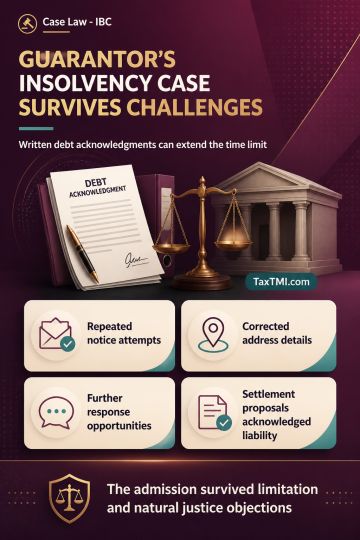
Service of notice and contractual debt acknowledgment preserved insolvency admission against a corporate guarantor despite limitation and natural just...
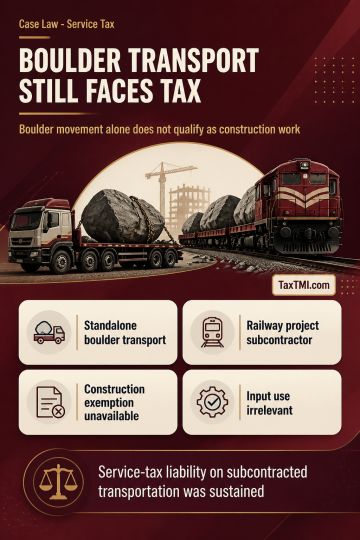
Original works exemption excludes standalone boulder transportation, leaving subcontracted railway-project transport services subject to service tax l...
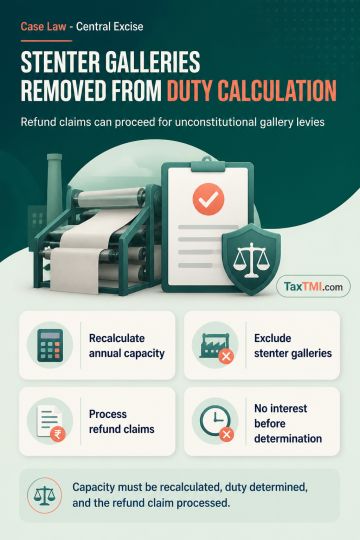
Annual production capacity determinations excluding stenter galleries support refunds for unconstitutional excise levies without an unjust-enrichment ...
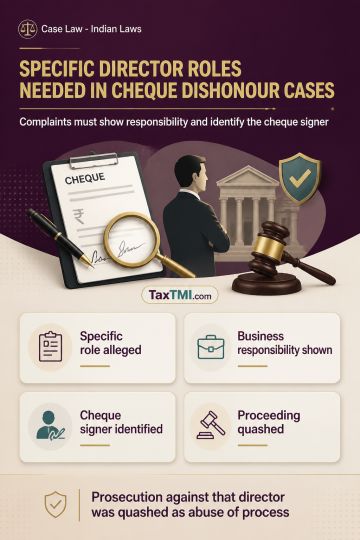
Vicarious liability for cheque dishonour requires specific allegations of responsibility and cheque signatory; generic director allegations cannot sus...
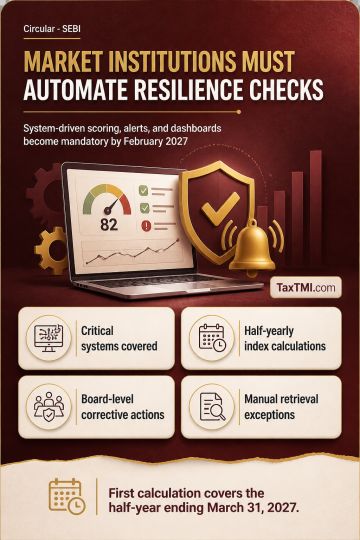
IT Resilience Index requires market infrastructure institutions to automate resilience scoring, early warnings, and continuous service-delivery monito...
ITAT allowed the assessees' appeals and deleted all additions made under s.153C. Relying on a coordinate bench decision arising from the same search group, ITAT held there was no seized material or statements indicating receipt of cash or other unaccounted consideration, nor any identified payer or corresponding additions in counterparties' hands. It held that in circular transactions, the margin disclosed in the books represents the commission element and, absent incriminating material, no higher income can be estimated on mere presumption. ITAT ruled that s.153C cannot be used for roving reassessment without assessee-specific incriminating material, and that estimated additions based on alleged bogus purchases/sales and enhanced profit rates were unsustainable. The jurisdictional challenge under s.153C was rendered academic.
ITAT allowed the assessees' appeals and deleted all additions made under s.153C. Relying on a coordinate bench decision arising from the same search group, ITAT held there was no seized material or statements indicating receipt of cash or other unaccounted consideration, nor any identified payer or corresponding additions in counterparties' hands. It held that in circular transactions, the margin disclosed in the books represents the commission element and, absent incriminating material, no higher income can be estimated on mere presumption. ITAT ruled that s.153C cannot be used for roving reassessment without assessee-specific incriminating material, and that estimated additions based on alleged bogus purchases/sales and enhanced profit rates were unsustainable. The jurisdictional challenge under s.153C was rendered academic.
Note: It is a system-generated summary and is for quick reference only.
 TaxTMI
  TaxTMI
 of 4828




 Join Channel