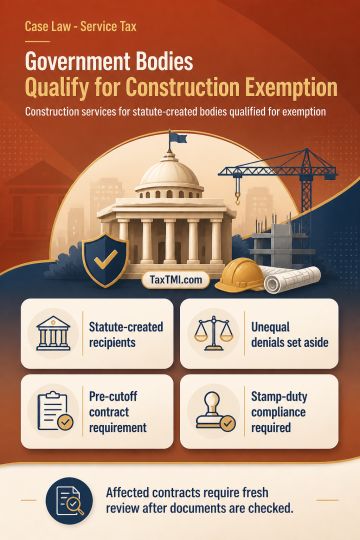
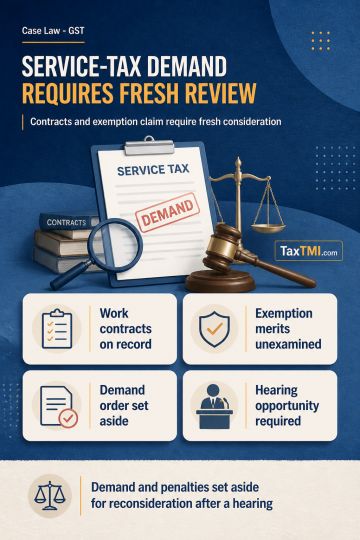
Governmental authority status supports construction-service exemption, while pre-cutoff contract and stamp-duty compliance requires verification on re...
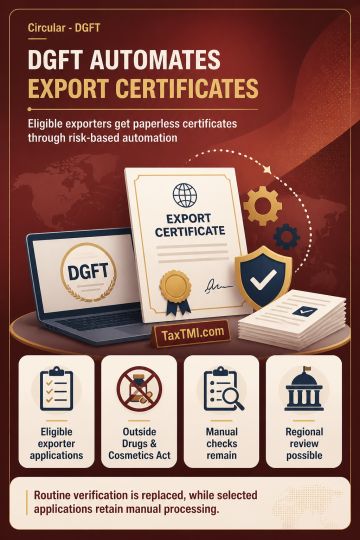
Automated Free Sale and Commerce Certificates enable paperless processing while retaining risk-based manual verification for selected exporter applica...
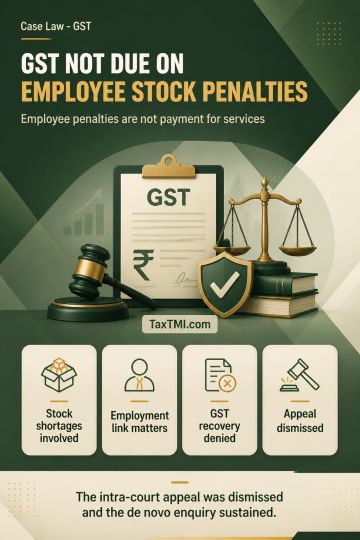
Employee stock-shortage penalties do not constitute consideration for services, preventing GST collection under Schedule II in employment relationship...
The customs authority issues a standing order implementing CBIC Circular No. 54/2016-Cus to rationalise and simplify the procedure for fixation of Brand Rate of duty drawback. Original duty-paid documents are no longer routinely required for endorsement or defacement; instead, up to 5% of originals of self-attested copies will be randomly selected for post-facto verification based on dynamic risk parameters set by the Commissioner. Current risk parameters target Bills of Entry for core inputs of export goods, high-value inputs, and inputs attracting higher customs duty. These parameters must be updated with technological or input changes, and exporters must submit all required documents and comply fully with the circular's conditions.
The customs authority issues a standing order implementing CBIC Circular No. 54/2016-Cus to rationalise and simplify the procedure for fixation of Brand Rate of duty drawback. Original duty-paid documents are no longer routinely required for endorsement or defacement; instead, up to 5% of originals of self-attested copies will be randomly selected for post-facto verification based on dynamic risk parameters set by the Commissioner. Current risk parameters target Bills of Entry for core inputs of export goods, high-value inputs, and inputs attracting higher customs duty. These parameters must be updated with technological or input changes, and exporters must submit all required documents and comply fully with the circular's conditions.
Note: It is a system-generated summary and is for quick reference only.
 TaxTMI
  TaxTMI
 of 4827








 Join Channel


