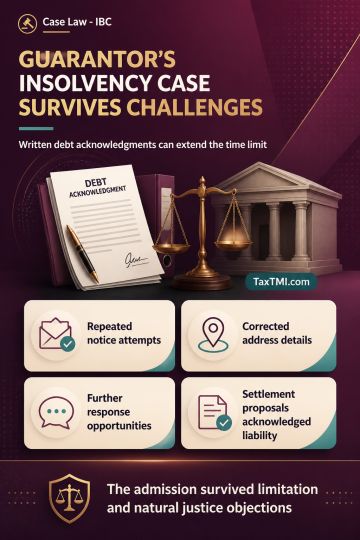
Service of notice and contractual debt acknowledgment preserved insolvency admission against a corporate guarantor despite limitation and natural just...
Original works exemption excludes standalone boulder transportation, leaving subcontracted railway-project transport services subject to service tax l...
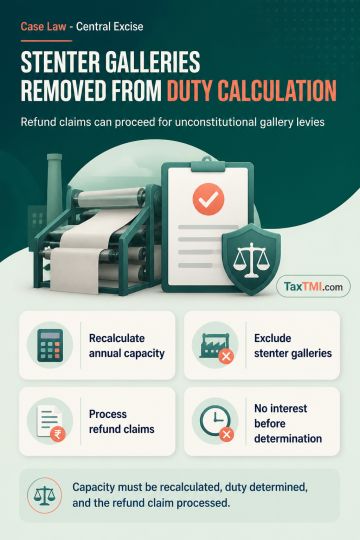
Annual production capacity determinations excluding stenter galleries support refunds for unconstitutional excise levies without an unjust-enrichment ...
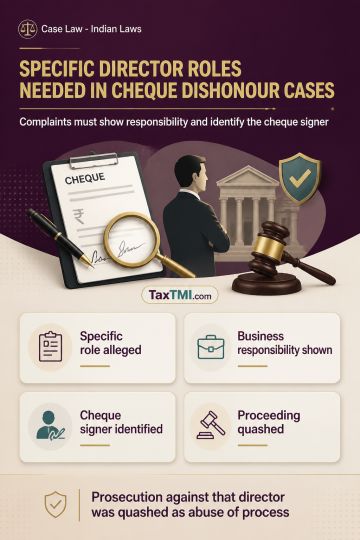
Vicarious liability for cheque dishonour requires specific allegations of responsibility and cheque signatory; generic director allegations cannot sus...
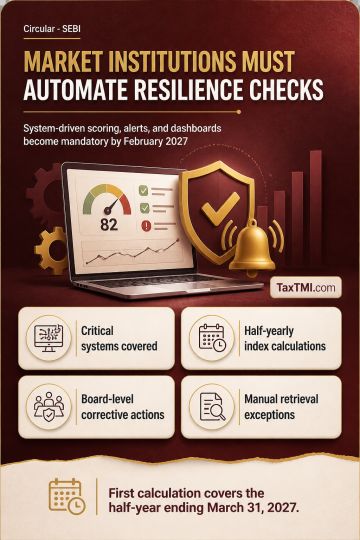
IT Resilience Index requires market infrastructure institutions to automate resilience scoring, early warnings, and continuous service-delivery monito...
The amendment to the Securities and Exchange Board of India (Foreign Venture Capital Investors) Regulations, 2000 introduces the concept of "Single Window Automatic and Generalised Access for Trusted Foreign Investor" (SWAGAT-FI), aligning its definition with the Foreign Portfolio Investors Regulations, 2019. It exempts SWAGAT-FIs from certain eligibility conditions under regulation 3(2) and from the prescribed 66.67% and 33.33% investment limits under regulation 11(c). It restructures renewal fee obligations for SWAGAT-FIs, requiring payment in advance for every ten-year block starting from the eleventh year of registration, as reflected in regulation 9(2) and the Second Schedule. The amendment comes into force 180 days after publication.
The amendment to the Securities and Exchange Board of India (Foreign Venture Capital Investors) Regulations, 2000 introduces the concept of "Single Window Automatic and Generalised Access for Trusted Foreign Investor" (SWAGAT-FI), aligning its definition with the Foreign Portfolio Investors Regulations, 2019. It exempts SWAGAT-FIs from certain eligibility conditions under regulation 3(2) and from the prescribed 66.67% and 33.33% investment limits under regulation 11(c). It restructures renewal fee obligations for SWAGAT-FIs, requiring payment in advance for every ten-year block starting from the eleventh year of registration, as reflected in regulation 9(2) and the Second Schedule. The amendment comes into force 180 days after publication.
Note: It is a system-generated summary and is for quick reference only.
 TaxTMI
  TaxTMI
 of 4828








 Join Channel