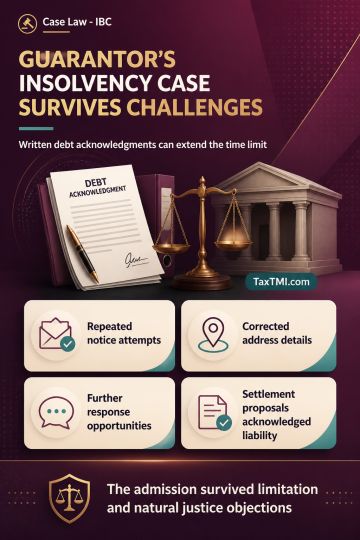
Service of notice and contractual debt acknowledgment preserved insolvency admission against a corporate guarantor despite limitation and natural just...
Original works exemption excludes standalone boulder transportation, leaving subcontracted railway-project transport services subject to service tax l...
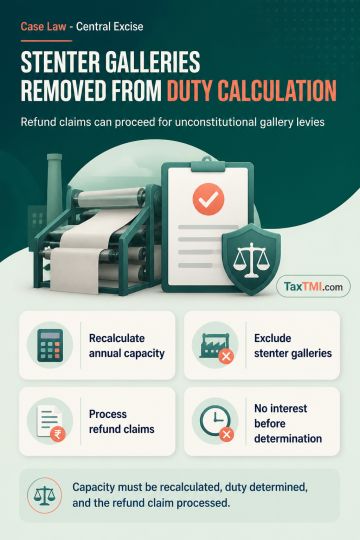
Annual production capacity determinations excluding stenter galleries support refunds for unconstitutional excise levies without an unjust-enrichment ...
Vicarious liability for cheque dishonour requires specific allegations of responsibility and cheque signatory; generic director allegations cannot sus...
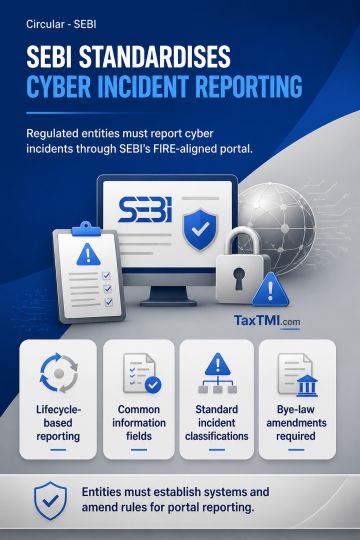
IT Resilience Index requires market infrastructure institutions to automate resilience scoring, early warnings, and continuous service-delivery monito...
ITAT held that, in principle, discretionary trusts with indeterminate or unknown beneficiary shares are liable to tax at the maximum marginal rate under s.164(1), unless covered by the limited statutory exceptions in s.164(3) or the proviso to s.164. ITAT upheld the CIT(A)'s view that CPC correctly applied the maximum marginal rate based on the return filed as AOP/BOI with sub-status of Business Trust and found no infirmity in the appellate order on this aspect. However, ITAT observed that crucial factual aspects remained unverified, including the nature of the trust under the Will, uniqueness of the trust, dependency and identifiability of beneficiaries, representative assessee status under s.160(1)(iv), and determinacy of shares. Accordingly, ITAT remanded the matter to the AO for de novo verification and fresh determination of tax status.
ITAT held that, in principle, discretionary trusts with indeterminate or unknown beneficiary shares are liable to tax at the maximum marginal rate under s.164(1), unless covered by the limited statutory exceptions in s.164(3) or the proviso to s.164. ITAT upheld the CIT(A)'s view that CPC correctly applied the maximum marginal rate based on the return filed as AOP/BOI with sub-status of Business Trust and found no infirmity in the appellate order on this aspect. However, ITAT observed that crucial factual aspects remained unverified, including the nature of the trust under the Will, uniqueness of the trust, dependency and identifiability of beneficiaries, representative assessee status under s.160(1)(iv), and determinacy of shares. Accordingly, ITAT remanded the matter to the AO for de novo verification and fresh determination of tax status.
Note: It is a system-generated summary and is for quick reference only.
 TaxTMI
  TaxTMI
 of 4828















 Join Channel