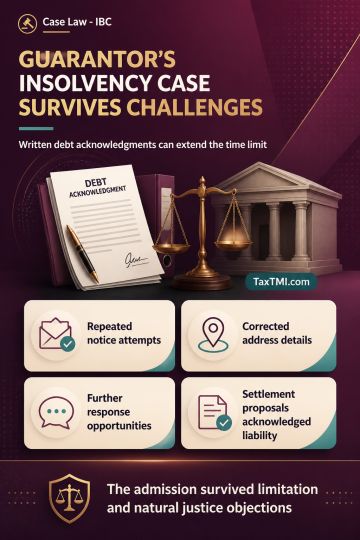
Service of notice and contractual debt acknowledgment preserved insolvency admission against a corporate guarantor despite limitation and natural just...
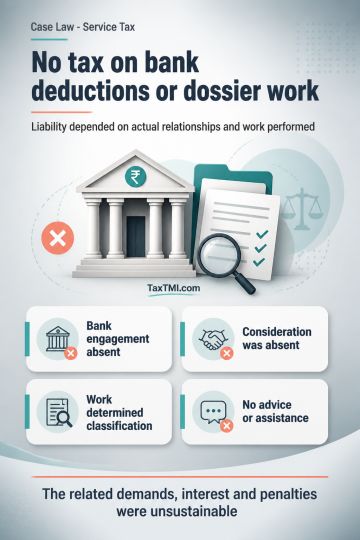
Original works exemption excludes standalone boulder transportation, leaving subcontracted railway-project transport services subject to service tax l...
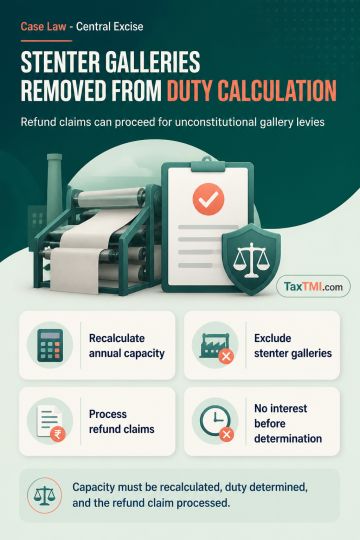
Annual production capacity determinations excluding stenter galleries support refunds for unconstitutional excise levies without an unjust-enrichment ...
Vicarious liability for cheque dishonour requires specific allegations of responsibility and cheque signatory; generic director allegations cannot sus...
IT Resilience Index requires market infrastructure institutions to automate resilience scoring, early warnings, and continuous service-delivery monito...
NCLAT allowed the appeal and set aside the NCLT order which had directed the suspended directors of the CD (appellants) to contribute to the liquidation estate under s.66 of the IBC. NCLAT held that the impugned share purchase transactions, though loss-making, were commercial decisions within the appellants' financial intermediation business and could not, on the available material, be characterised as fraudulent or wrongful trading. The Appellate Tribunal found that the transactional audit report was not conclusive evidence and that the NCLT failed to examine whether the statutory conditions under s.66(2) were cumulatively satisfied, particularly knowledge of inevitable CIRP and lack of due diligence in minimising creditor losses. Consequently, the findings of fraudulent transactions and corresponding liability of the appellants were vacated.
NCLAT allowed the appeal and set aside the NCLT order which had directed the suspended directors of the CD (appellants) to contribute to the liquidation estate under s.66 of the IBC. NCLAT held that the impugned share purchase transactions, though loss-making, were commercial decisions within the appellants' financial intermediation business and could not, on the available material, be characterised as fraudulent or wrongful trading. The Appellate Tribunal found that the transactional audit report was not conclusive evidence and that the NCLT failed to examine whether the statutory conditions under s.66(2) were cumulatively satisfied, particularly knowledge of inevitable CIRP and lack of due diligence in minimising creditor losses. Consequently, the findings of fraudulent transactions and corresponding liability of the appellants were vacated.
Note: It is a system-generated summary and is for quick reference only.
 TaxTMI
  TaxTMI
 of 4828














 Join Channel