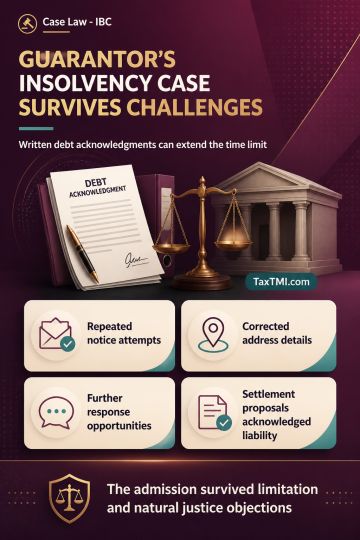
Service of notice and contractual debt acknowledgment preserved insolvency admission against a corporate guarantor despite limitation and natural just...
Original works exemption excludes standalone boulder transportation, leaving subcontracted railway-project transport services subject to service tax l...
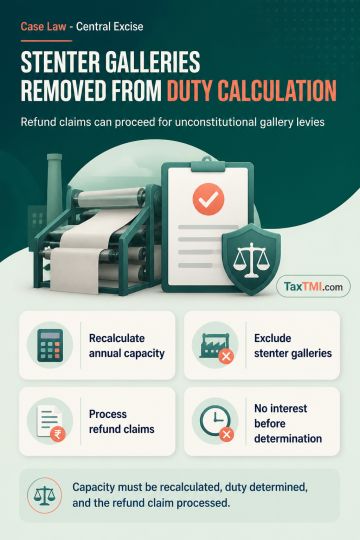
Annual production capacity determinations excluding stenter galleries support refunds for unconstitutional excise levies without an unjust-enrichment ...
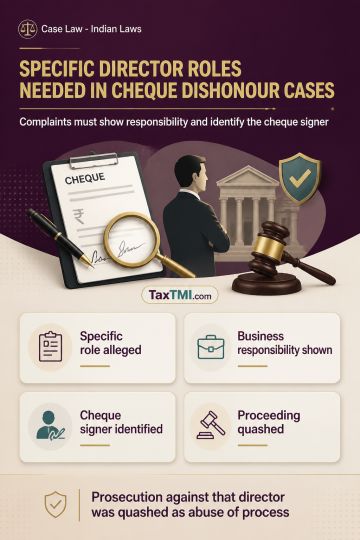
Vicarious liability for cheque dishonour requires specific allegations of responsibility and cheque signatory; generic director allegations cannot sus...
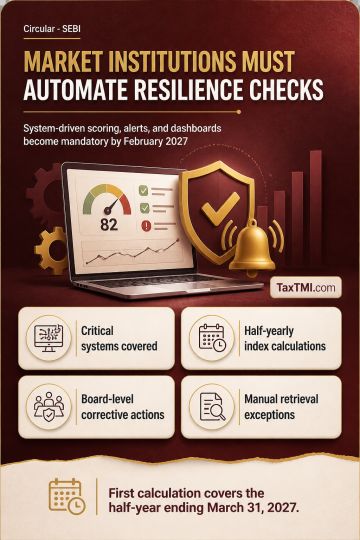
IT Resilience Index requires market infrastructure institutions to automate resilience scoring, early warnings, and continuous service-delivery monito...
CESTAT held that the revenue could not treat the importer's written "acceptance" of enhanced assessable value as unconditional, since contemporaneous letters clearly showed clearance was sought on payment of duty under protest, including a request for provisional assessment. As all bills of entry were post-2011, the Proper Officer was statutorily obliged under s.17(5) of the Customs Act to issue a speaking order recording reasons for rejection of the declared transaction value and basis of enhancement, which was not done. CESTAT ruled that the statutory right to challenge the Proper Officer's decision cannot be waived merely by acceptance letters, particularly when contemporaneous import data was neither disclosed nor discussed. Consequently, the impugned Orders-in-Appeal were set aside and the appeals of M/s X allowed, with directions to re-determine assessable value strictly in accordance with s.17(5) and principles of natural justice.
CESTAT held that the revenue could not treat the importer's written "acceptance" of enhanced assessable value as unconditional, since contemporaneous letters clearly showed clearance was sought on payment of duty under protest, including a request for provisional assessment. As all bills of entry were post-2011, the Proper Officer was statutorily obliged under s.17(5) of the Customs Act to issue a speaking order recording reasons for rejection of the declared transaction value and basis of enhancement, which was not done. CESTAT ruled that the statutory right to challenge the Proper Officer's decision cannot be waived merely by acceptance letters, particularly when contemporaneous import data was neither disclosed nor discussed. Consequently, the impugned Orders-in-Appeal were set aside and the appeals of M/s X allowed, with directions to re-determine assessable value strictly in accordance with s.17(5) and principles of natural justice.
Note: It is a system-generated summary and is for quick reference only.
 TaxTMI
  TaxTMI
 of 4828




 Join Channel