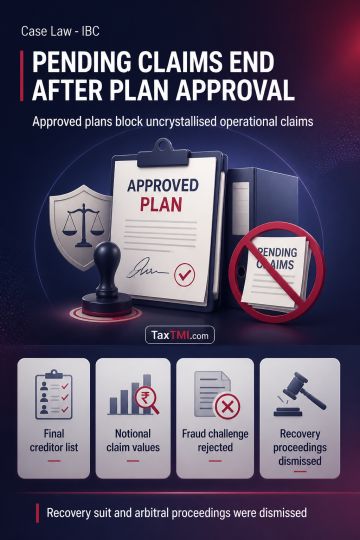
Clean slate principle extinguishes uncrystallised operational claims and bars continuation of pending recovery and arbitral proceedings after plan app...
Works contract classification governs composite layout-development contracts where VAT-paid goods are transferred alongside construction and infrastru...
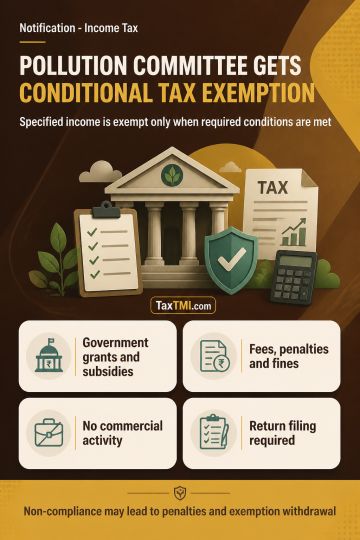
Specified income tax exemption for pollution control body remains conditional on non-commercial activity, unchanged income character, and return filin...
Jurisdictional facts in certificate-of-origin discrepancies can support customs show-cause proceedings, leaving factual explanations for departmental ...
SC held that key provisions of the Tribunal Reforms Act, 2021, including those on minimum age, curtailed tenure, upper age caps, panel selection process, and equivalence of service conditions with civil servants, are unconstitutional. The Court found that Parliament had impermissibly reenacted, in altered form, provisions previously struck down, without curing the constitutional defects, amounting to a legislative override of binding judicial directions. Such measures were held violative of constitutional supremacy, separation of powers, judicial independence, and Article 14. SC clarified that while Parliament may enact curative legislation, it cannot disregard or nullify prior judicial pronouncements. The offending provisions were struck down, with protection extended to affected tribunal members whose appointments had been delayed and improperly subjected to the new regime. Petitions were disposed of.
SC held that key provisions of the Tribunal Reforms Act, 2021, including those on minimum age, curtailed tenure, upper age caps, panel selection process, and equivalence of service conditions with civil servants, are unconstitutional. The Court found that Parliament had impermissibly reenacted, in altered form, provisions previously struck down, without curing the constitutional defects, amounting to a legislative override of binding judicial directions. Such measures were held violative of constitutional supremacy, separation of powers, judicial independence, and Article 14. SC clarified that while Parliament may enact curative legislation, it cannot disregard or nullify prior judicial pronouncements. The offending provisions were struck down, with protection extended to affected tribunal members whose appointments had been delayed and improperly subjected to the new regime. Petitions were disposed of.
Note: It is a system-generated summary and is for quick reference only.
 TaxTMI
 of 4792











 Join Channel


 TaxTMI