Section 80P deduction covers Souharda credit societies, including qualifying surplus-deposit interest, subject to member KYC verification for cash dep...
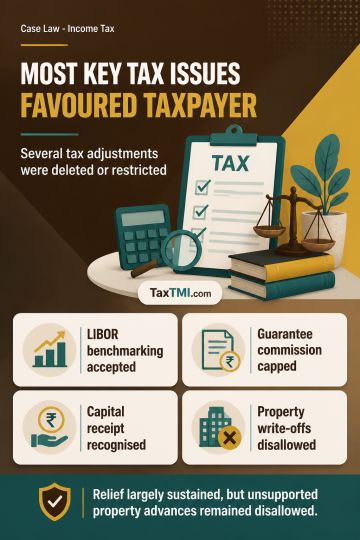
Transfer-pricing benchmarking and capital-receipt principles sustained taxpayer relief, while unsupported property-advance write-offs remained disallo...
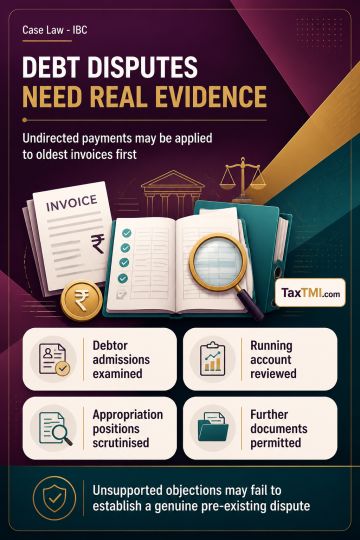
Pre-existing operational debt disputes require genuine evidence, while undirected running-account payments may be appropriated on a first-in-first-out...
Agency in CNG distribution makes outlet operators commission agents, rendering taxable Business Auxiliary Service rather than purchasing goods for res...
SC held that key provisions of the Tribunal Reforms Act, 2021, including those on minimum age, curtailed tenure, upper age caps, panel selection process, and equivalence of service conditions with civil servants, are unconstitutional. The Court found that Parliament had impermissibly reenacted, in altered form, provisions previously struck down, without curing the constitutional defects, amounting to a legislative override of binding judicial directions. Such measures were held violative of constitutional supremacy, separation of powers, judicial independence, and Article 14. SC clarified that while Parliament may enact curative legislation, it cannot disregard or nullify prior judicial pronouncements. The offending provisions were struck down, with protection extended to affected tribunal members whose appointments had been delayed and improperly subjected to the new regime. Petitions were disposed of.
SC held that key provisions of the Tribunal Reforms Act, 2021, including those on minimum age, curtailed tenure, upper age caps, panel selection process, and equivalence of service conditions with civil servants, are unconstitutional. The Court found that Parliament had impermissibly reenacted, in altered form, provisions previously struck down, without curing the constitutional defects, amounting to a legislative override of binding judicial directions. Such measures were held violative of constitutional supremacy, separation of powers, judicial independence, and Article 14. SC clarified that while Parliament may enact curative legislation, it cannot disregard or nullify prior judicial pronouncements. The offending provisions were struck down, with protection extended to affected tribunal members whose appointments had been delayed and improperly subjected to the new regime. Petitions were disposed of.
Note: It is a system-generated summary and is for quick reference only.
 TaxTMI
 of 4792














 Join Channel


 TaxTMI
