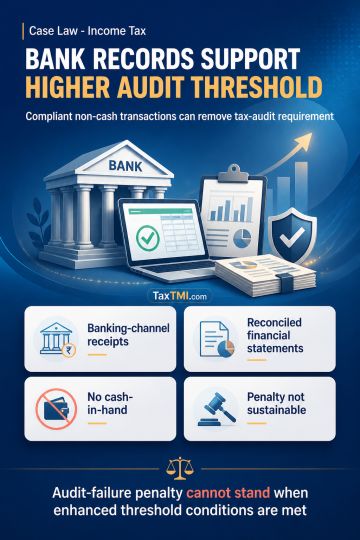
Enhanced tax-audit threshold applies where banking records establish compliant non-cash receipts and payments, eliminating penalty exposure for audit ...
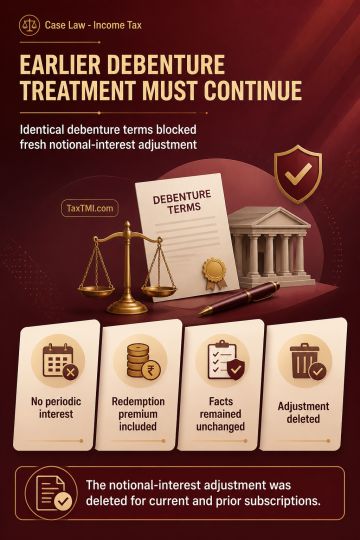
Transfer pricing consistency protects identical non-interest-bearing debenture terms from a later notional-interest adjustment without valid statutory...
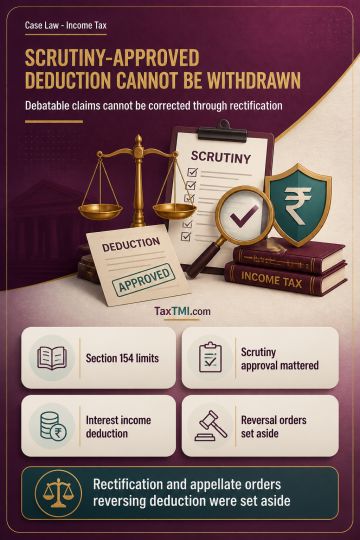
Rectification of debatable deduction claims cannot reverse scrutiny-approved co-operative society interest income deductions as apparent record errors...
Cash-method accounting bars presumptive interest taxation, while unsupported securities and share-trading additions require reliable material and veri...
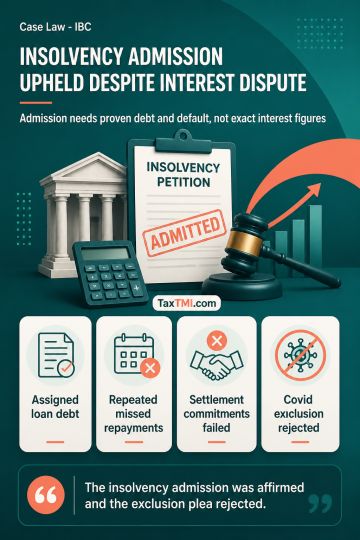
Section 7 admission requires established financial debt and default, not precise interest quantification, while post-suspension defaults remain action...
CESTAT allowed the appeal of the 100% EOU, holding that the benefit of N/N. 52/2003-Cus applies to inputs used in manufacture even where wastage exceeds SION norms, provided the inputs are actually used in the production process and waste/scrap is duly cleared on payment of duty and not removed unauthorisedly. Relying on the interpretation of the non-obstante clause in the notification, the Tribunal rejected the Department's view that excess wastage automatically attracted duty or penalty. It held that the Commissioner and the adjudicating authority had erred in demanding customs duty of Rs. 34,555/-, imposing penalty of Rs. 5,000/- and redemption fine of Rs. 20,000/-. All such demands and penalties were set aside, and the appeal was fully allowed.
CESTAT allowed the appeal of the 100% EOU, holding that the benefit of N/N. 52/2003-Cus applies to inputs used in manufacture even where wastage exceeds SION norms, provided the inputs are actually used in the production process and waste/scrap is duly cleared on payment of duty and not removed unauthorisedly. Relying on the interpretation of the non-obstante clause in the notification, the Tribunal rejected the Department's view that excess wastage automatically attracted duty or penalty. It held that the Commissioner and the adjudicating authority had erred in demanding customs duty of Rs. 34,555/-, imposing penalty of Rs. 5,000/- and redemption fine of Rs. 20,000/-. All such demands and penalties were set aside, and the appeal was fully allowed.
Note: It is a system-generated summary and is for quick reference only.
 TaxTMI
  TaxTMI
 of 4830












 Join Channel


