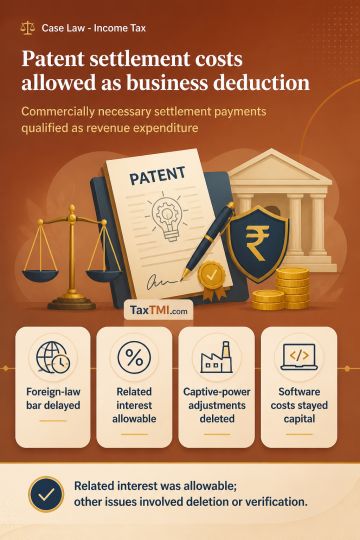
Patent-settlement expenditure treated as commercially expedient revenue outlay, with foreign-law restrictions inapplicable before the prospective amen...
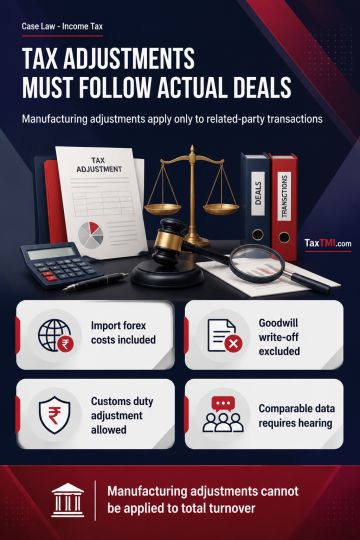
International transaction benchmarking restricts transfer pricing adjustments to associated-enterprise dealings, while functional comparability govern...
The SC held that the complainant, a corporate entity, was not a "consumer" under Section 2(1)(d) of the Consumer Protection Act, 1986 because the purchase of a software license was for commercial purposes to automate operations and maximise profits, not for self-employment or personal livelihood. The Court distinguished self-employed individuals from corporate entities, observing that the Explanation excludes only goods/services used exclusively for earning livelihood by self-employment. Both the State Commission and the National Commission correctly found lack of maintainability of the complaint on the consumer law forum. Consequently, the complaint was non-maintainable under the Act and the appeal was dismissed.
The SC held that the complainant, a corporate entity, was not a "consumer" under Section 2(1)(d) of the Consumer Protection Act, 1986 because the purchase of a software license was for commercial purposes to automate operations and maximise profits, not for self-employment or personal livelihood. The Court distinguished self-employed individuals from corporate entities, observing that the Explanation excludes only goods/services used exclusively for earning livelihood by self-employment. Both the State Commission and the National Commission correctly found lack of maintainability of the complaint on the consumer law forum. Consequently, the complaint was non-maintainable under the Act and the appeal was dismissed.
Note: It is a system-generated summary and is for quick reference only.
 TaxTMI
 of 4792



 Join Channel


 TaxTMI
