Commercial vehicle depreciation, scientifically determined warranty provisions and exempt-income disallowances were resolved in favour of the taxpayer...
Inherited property sale proceeds require capital-gains treatment where ownership is supported by evidence, not suspicion or unverified signature doubt...
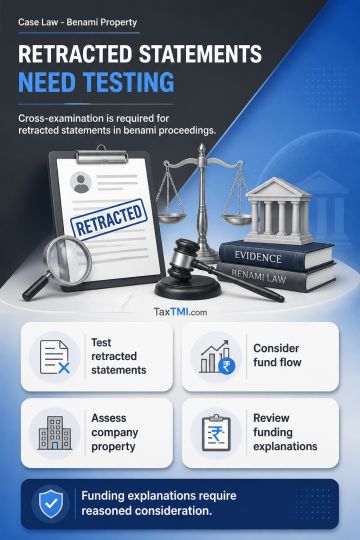
Cross-examination of retracted statements is essential where foundational evidence supports a benami allegation and documented funding explanations re...
Capital-goods exemption covers plant-modernisation accessories, while the import restriction applies only to earlier capital-goods components and spar...
The tax board notifies that communications sent via the customs department's eOffice public option bearing an automatically generated verifiable "Issue number" will be treated as the Document Identification Number (DIN), since a new online verification utility confirms issue number, file number, date, document type and masked recipient details; officers must accurately populate metadata when creating documents. DIN remains mandatory for communications not sent via eOffice public option or lacking a verifiable reference number on the GST portal. Earlier circulars requiring separate DINs are modified to this extent.
The tax board notifies that communications sent via the customs department's eOffice public option bearing an automatically generated verifiable "Issue number" will be treated as the Document Identification Number (DIN), since a new online verification utility confirms issue number, file number, date, document type and masked recipient details; officers must accurately populate metadata when creating documents. DIN remains mandatory for communications not sent via eOffice public option or lacking a verifiable reference number on the GST portal. Earlier circulars requiring separate DINs are modified to this extent.
Note: It is a system-generated summary and is for quick reference only.
 TaxTMI
 of 4801














 Join Channel


 TaxTMI