Pre-existing operational debt disputes require genuine evidence, while undirected running-account payments may be appropriated on a first-in-first-out...
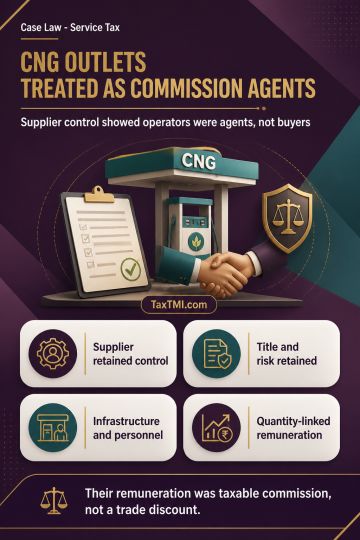
Agency in CNG distribution makes outlet operators commission agents, rendering taxable Business Auxiliary Service rather than purchasing goods for res...
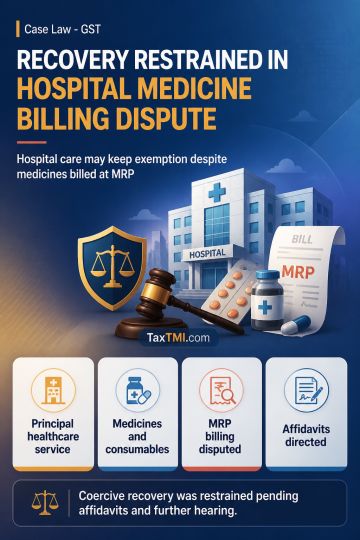
Composite inpatient healthcare supply may retain exemption despite MRP medicine billing, while separate taxable sale characterisation remains disputed...
The HC dismissed the petition challenging action under section 129(3) of the GST Act, holding that although an e-way bill was ultimately produced before the seizure and penalty orders, it was not generated contemporaneously with movement and was created after interception (at 1:19 p.m.), evidencing non-compliance with statutory requirements; accordingly, the court found no basis to infer absence of intent to evade tax or to disturb the impugned orders. The court applied its prior ratio and upheld the seizure and penalty, concluding that, on the facts and in law, no interference with the administrative orders was warranted.
The HC dismissed the petition challenging action under section 129(3) of the GST Act, holding that although an e-way bill was ultimately produced before the seizure and penalty orders, it was not generated contemporaneously with movement and was created after interception (at 1:19 p.m.), evidencing non-compliance with statutory requirements; accordingly, the court found no basis to infer absence of intent to evade tax or to disturb the impugned orders. The court applied its prior ratio and upheld the seizure and penalty, concluding that, on the facts and in law, no interference with the administrative orders was warranted.
Note: It is a system-generated summary and is for quick reference only.
 TaxTMI
 of 4805










 Join Channel


 TaxTMI
